Story-Telling (Day 4)

It matters what — and whose — stories are told.

After a busy Pentecost full of worship and wine, we went up to Gori to visit a soup kitchen that my church in Fort Worth, Broadway Baptist, has been supporting. First, though, we stopped by the Joseph Stalin Museum. Stalin was born in Gori, and on the museum’s grounds is his actual childhood home. The museum also boasts the railway car that he traveled in, his personal suitcase, models of previous homes, and many, many photos, busts, and statues. The museum feels … odd, given its reverence for such a reviled figure.
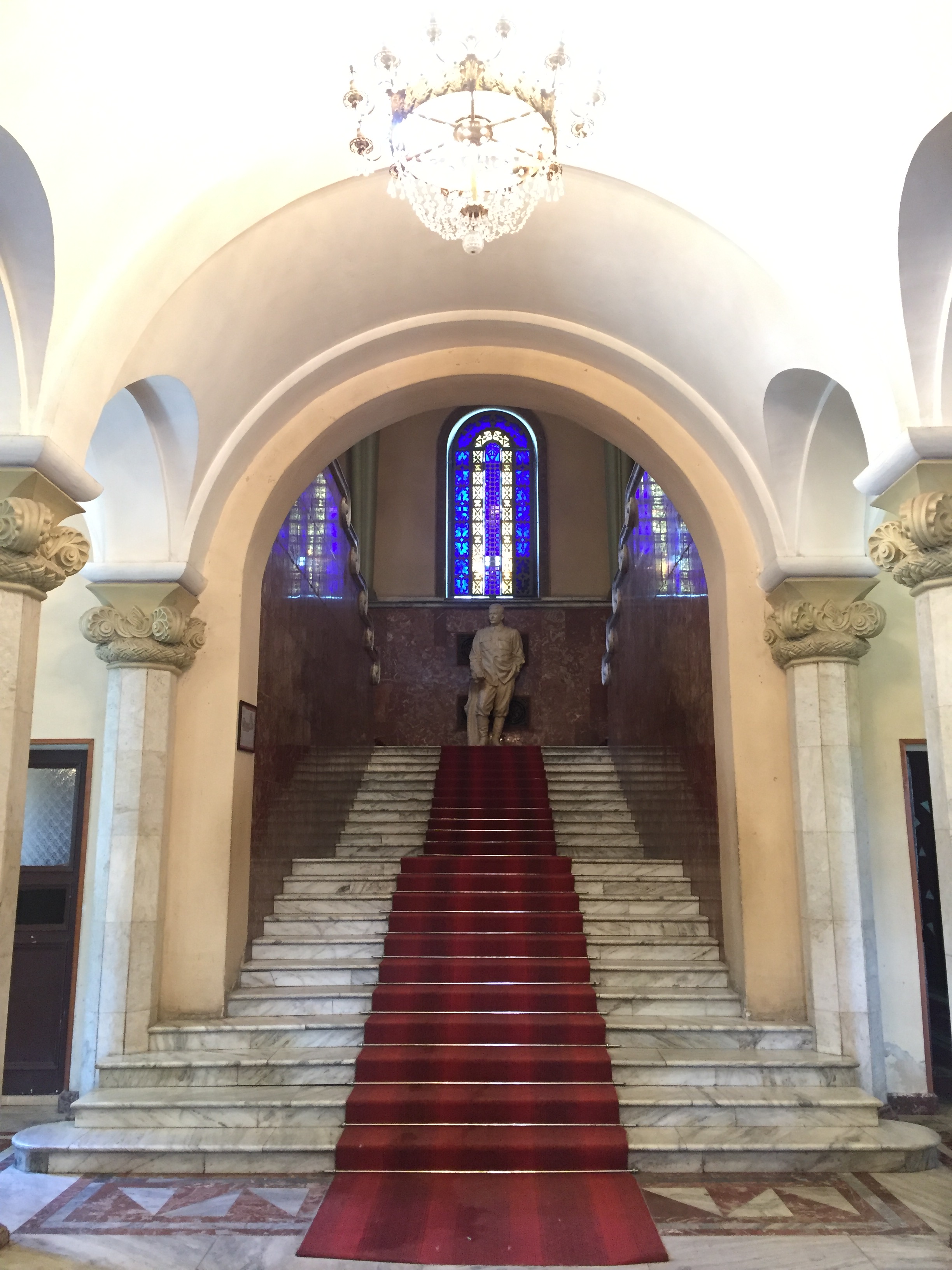
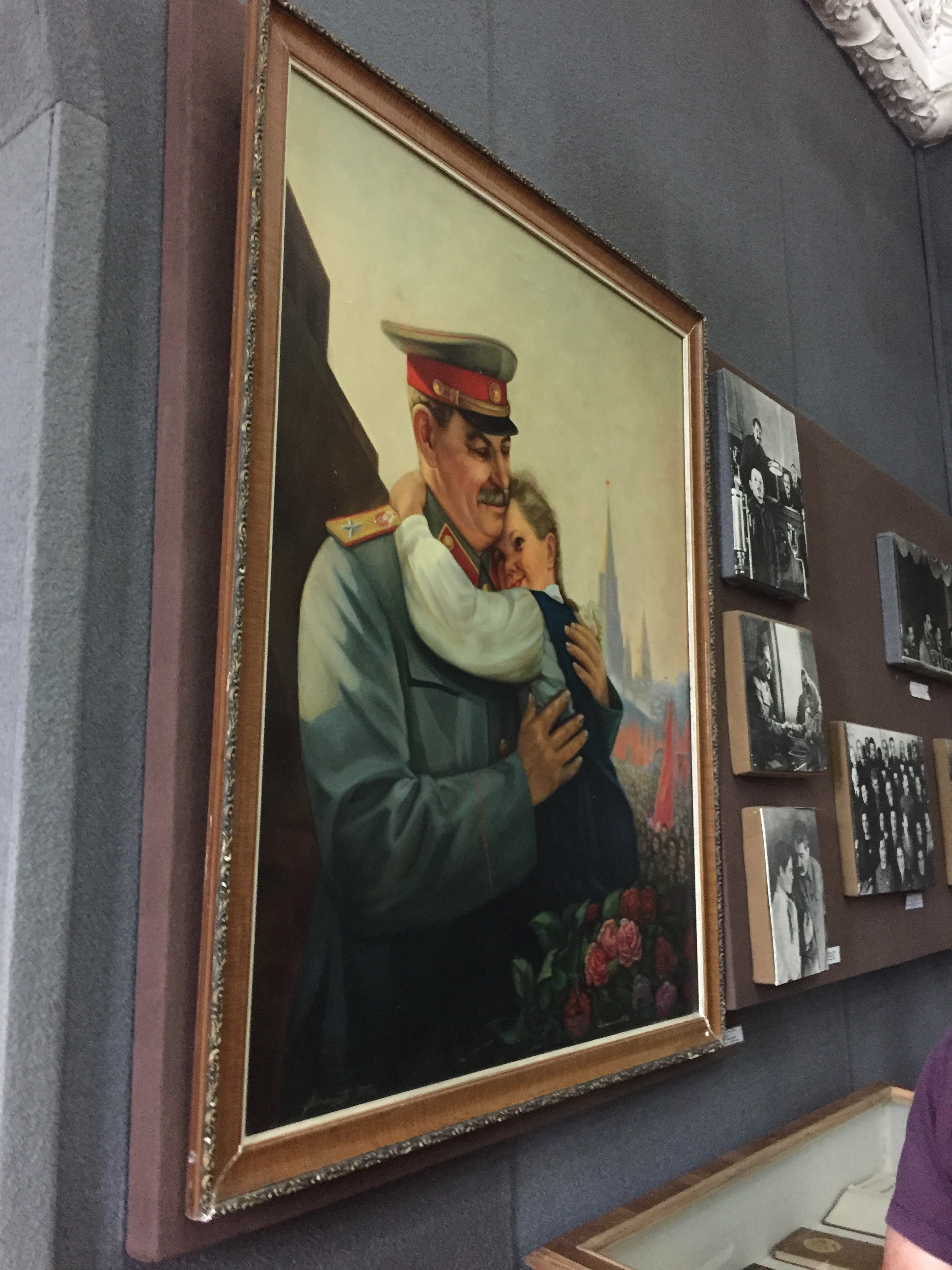
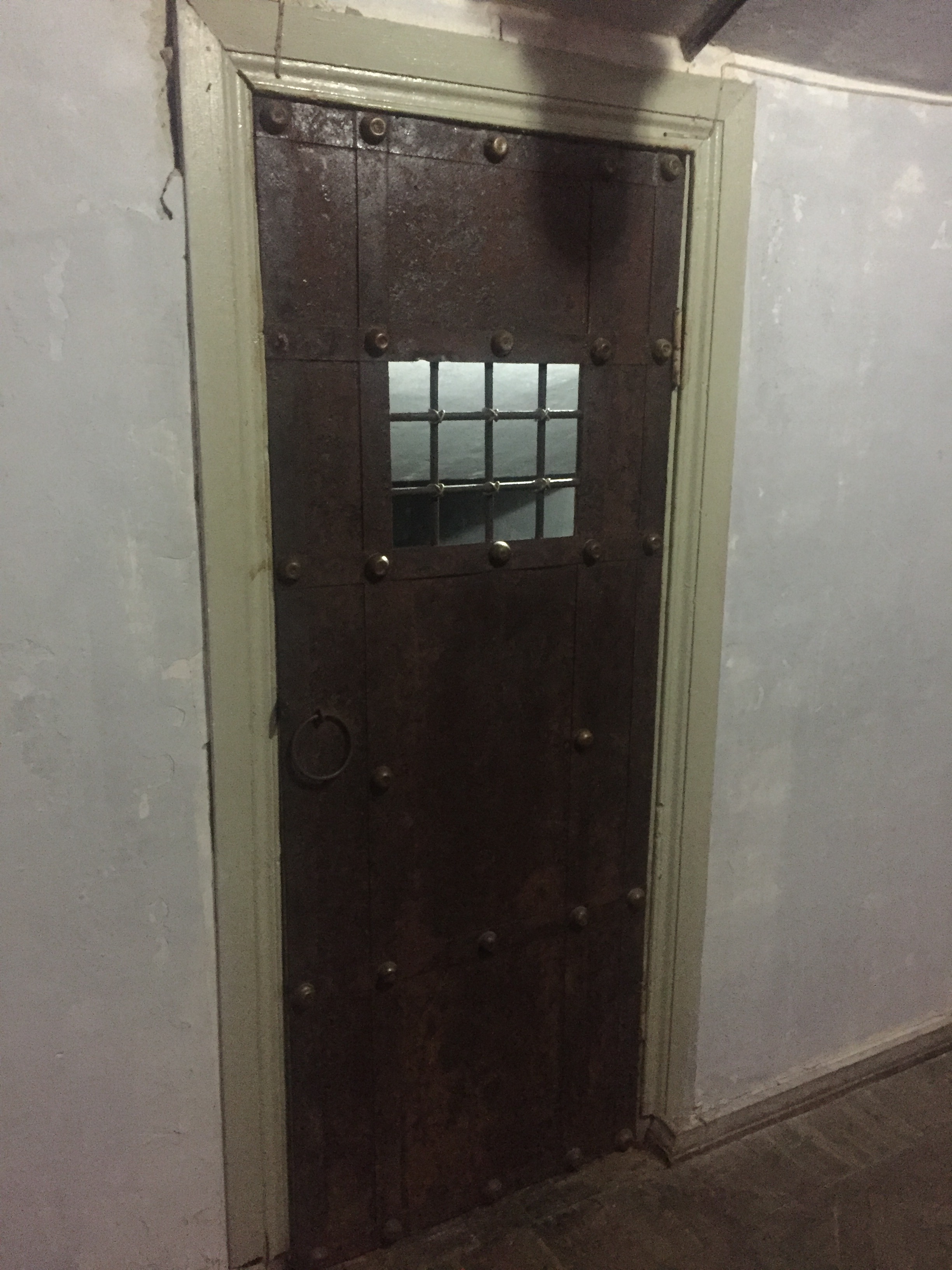
It didn’t take us long to bail on the tour, given without much enthusiasm in English by a young Georgian woman in a brightly patterned blouse. We wandered through the exhibits; the captions of photos were in Georgian, Russian, and English, but little else was translated into English. Also conspicuously absent were mentions of Stalin’s policies and procedures that murdered millions. Except for one small room, tucked under the grand staircase, in which a wall of quotations — in Georgian and Russian — led to a model of a prison cell. Ala translated some of the quotations for us; they all acknowledged the deaths as necessary for the cause. There was no remorse, regret, or indication that this man was anything less than a visionary. We passed a gift store on our way out, at which you could buy a cap or mug with Stalin’s name on them.
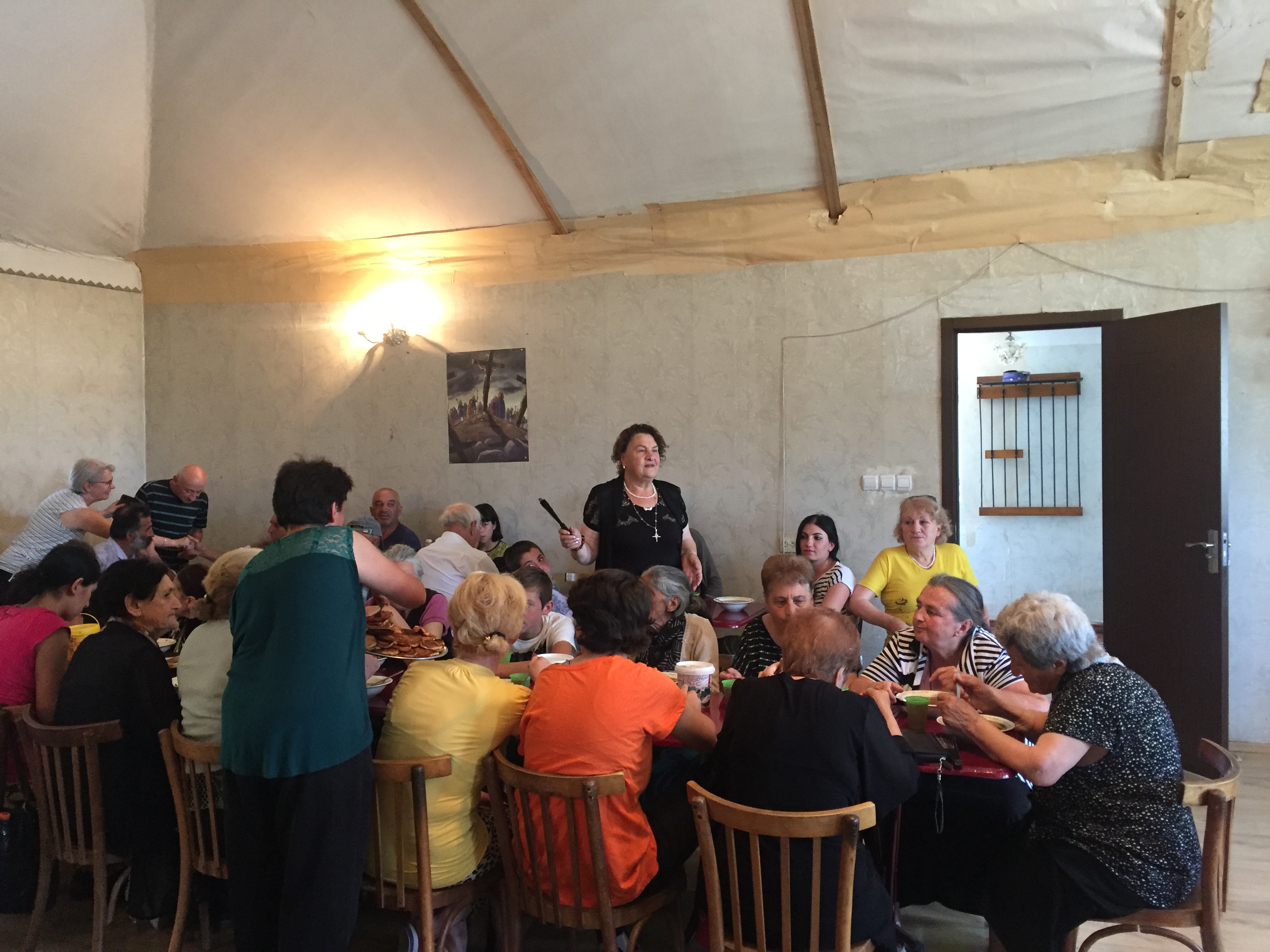
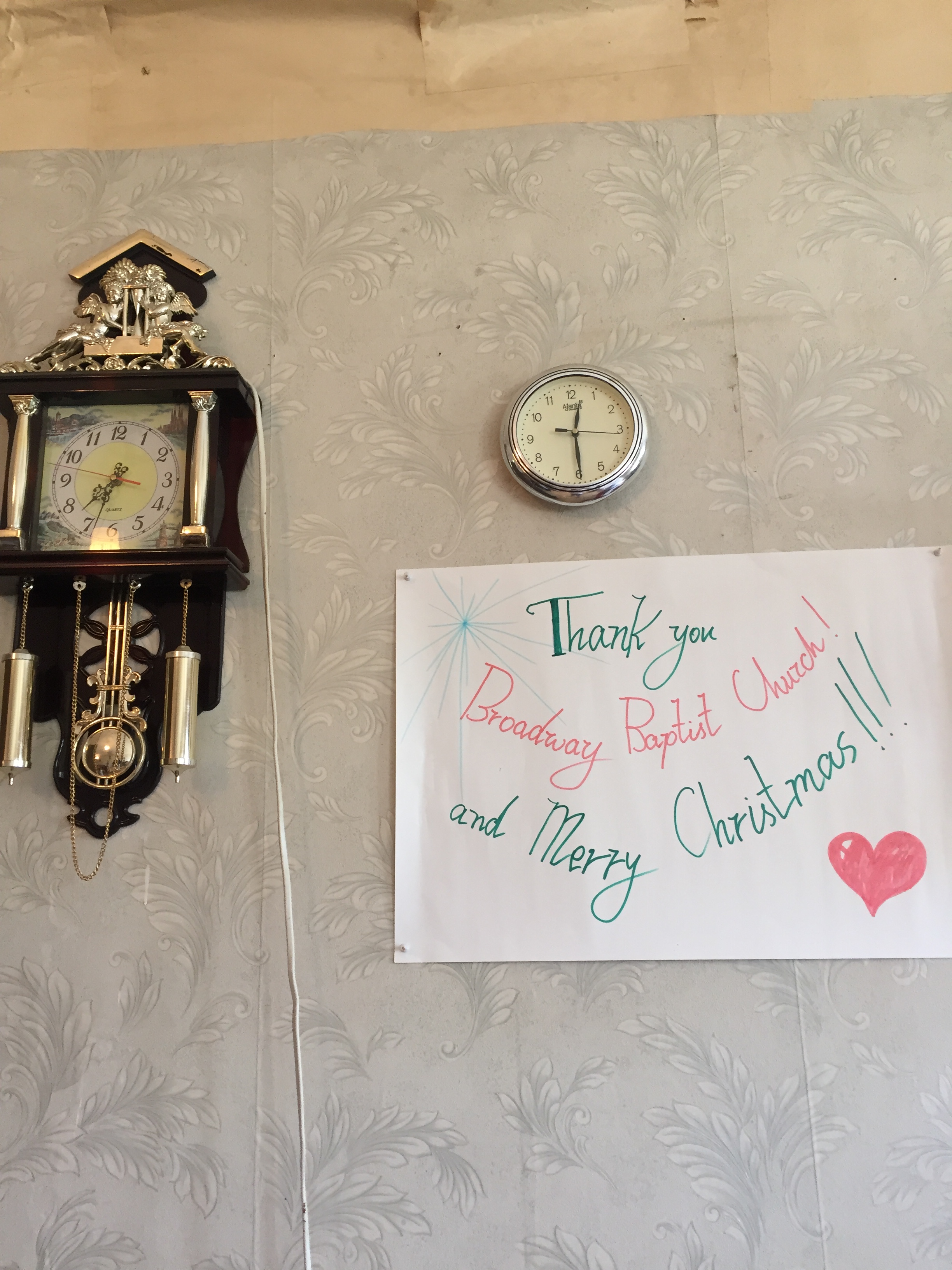
We went from there to the soup kitchen in Gori, where we met Leanna, whose passion and vitality was evident, even though we didn’t share a language. We arrived during a meal. Thirty people sat around two tables in the small church building, where they ate a hearty stew and some bread. On the wall was a “Thank you, Broadway Baptist! And Merry Christmas,” sign next to two clocks. Leanna pulled people away from their meals to speak with us, including a young girl who was a child when she started coming to meals at the church, but now is nearly a young woman. Many of the others sharing lunch together were older, and Leanna said they did not have any family look after them. For them, this may be the only meal they get that day, and so the kitchen is open six days a week.
The small church yard is surrounded by beautifully tended flowers and a burgeoning vegetable garden. The brightness of the flowers, the unexpected beauty and clear care that goes into keeping them growing, contrasts with the empty lots, chainlink fences, and massive apartment buildings of the neighborhood. The church also has a lovely new well, which pumps out clean and cold water. The care that Leanna and others have for this church, and the importance of its work in the community, was apparent.
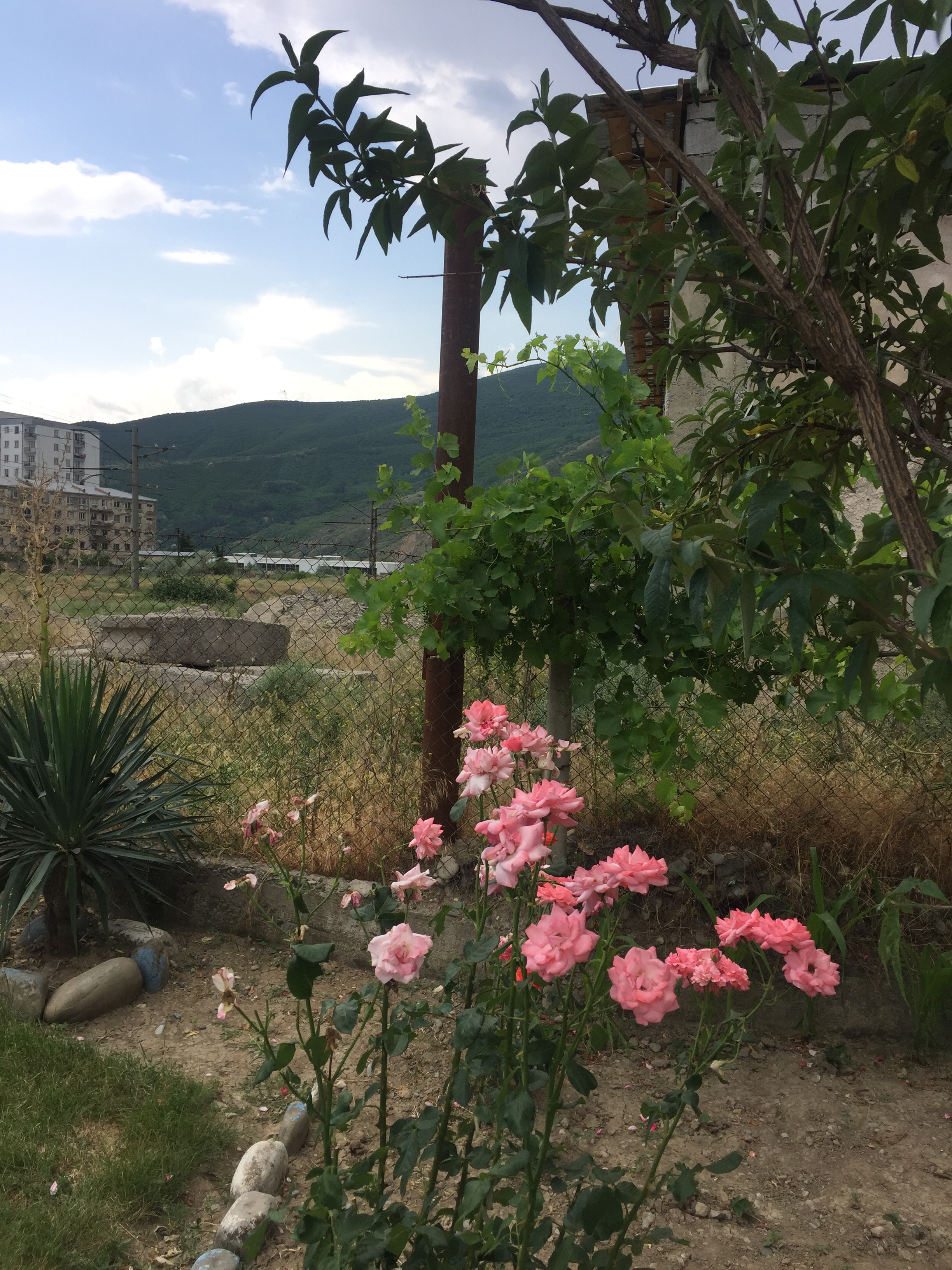
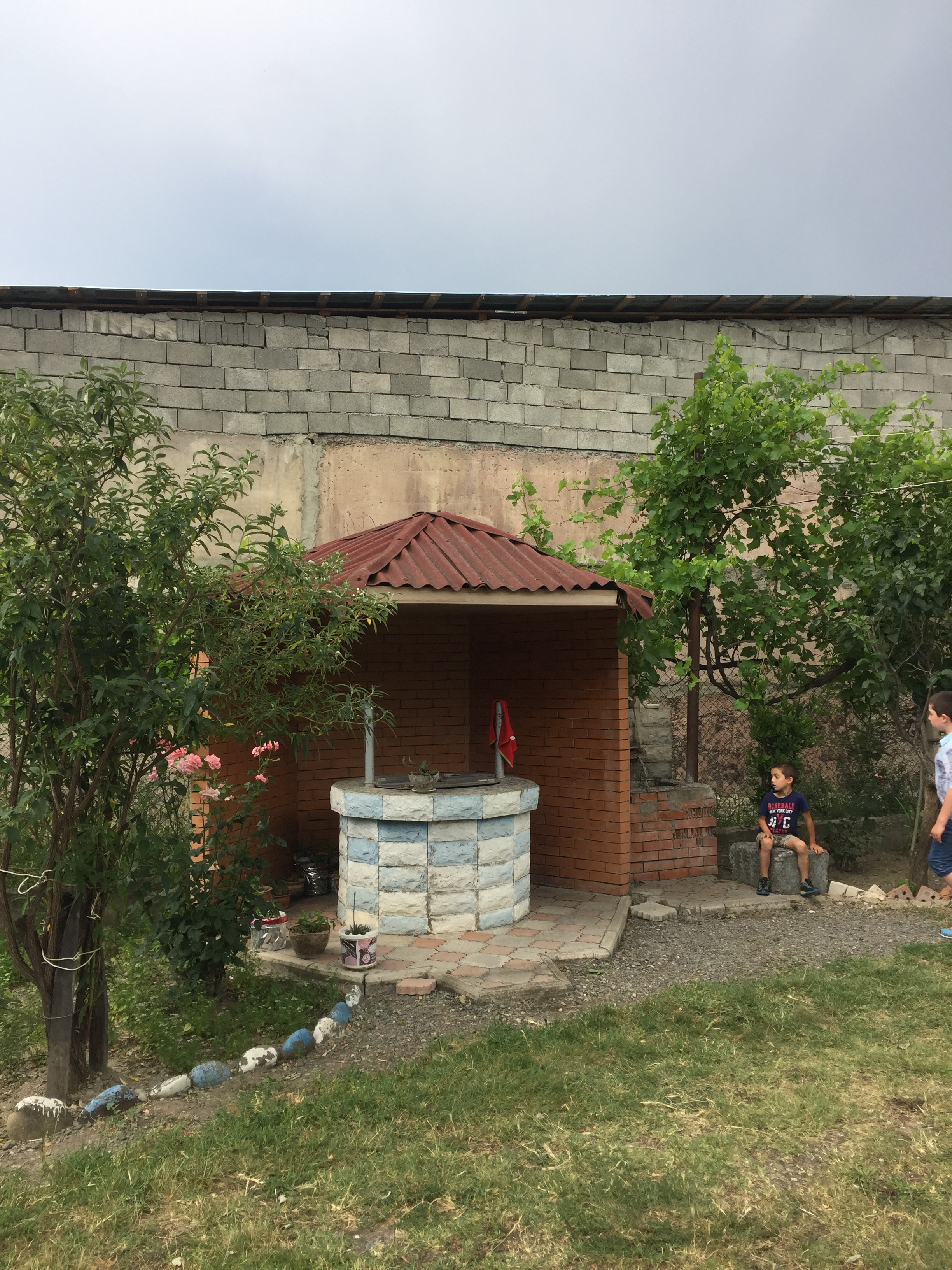
Leanna, the church, and the soup kitchen are the real story and legacy of Gori.

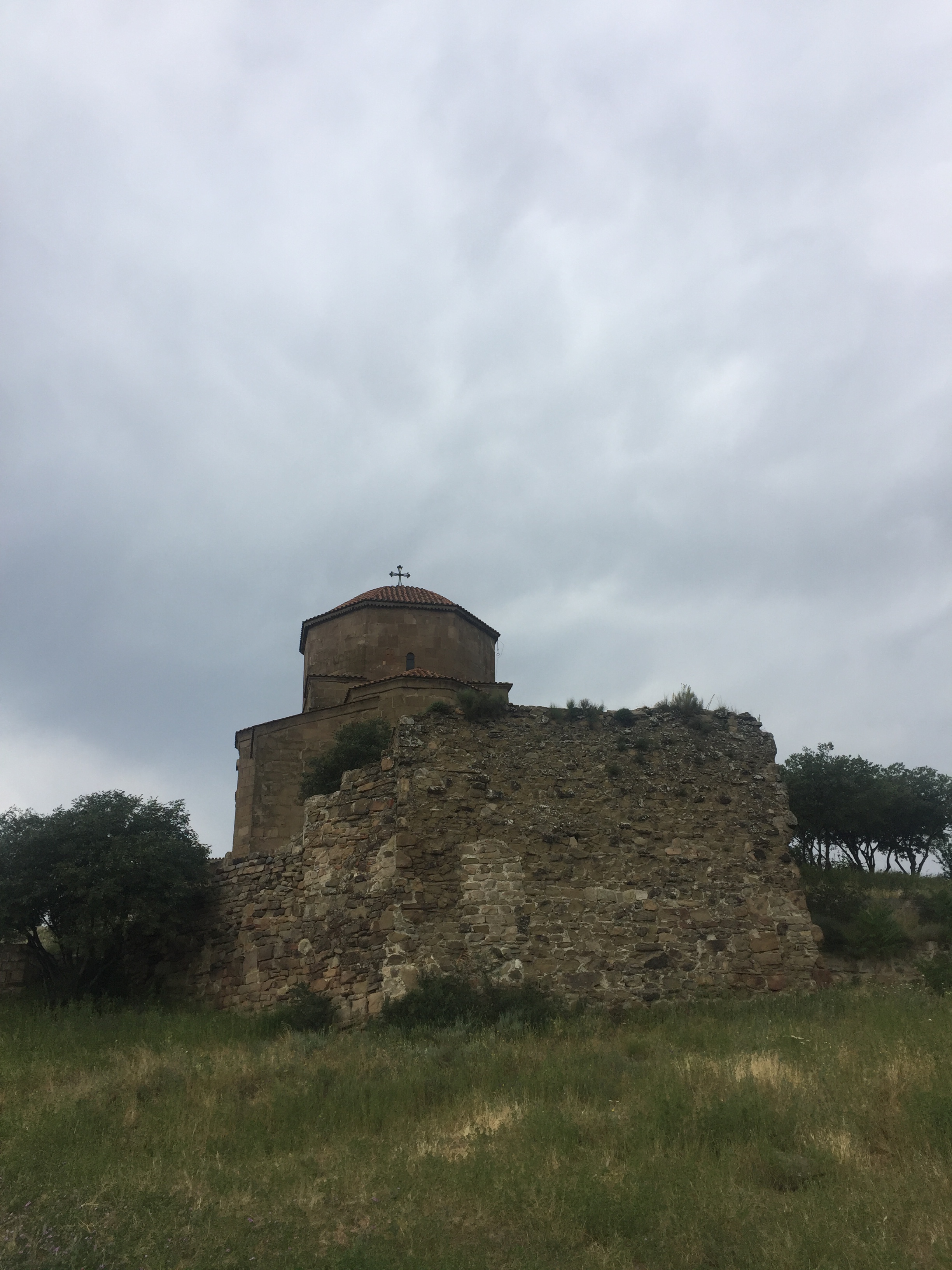
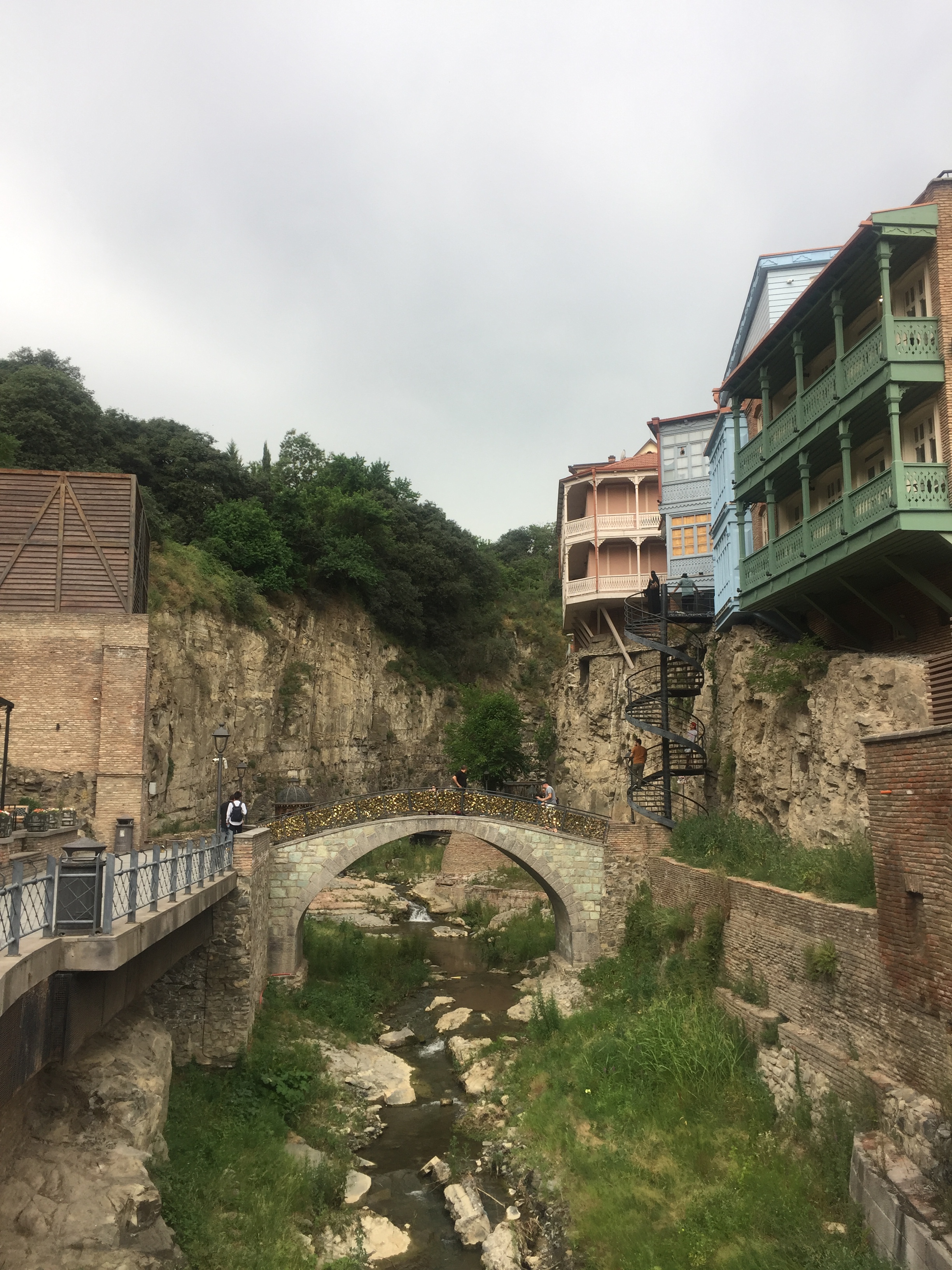
After lunch at Leanna’s, we stopped by Jvari Church, a 6th century church, before heading to Old Town Tbilisi, a place with old homes, sulfur baths, and a hidden waterfall. We visited the mosque, the only one in the world where Sunni and Shia Muslims pray together. We then visited an Armenian cathedral and discussed which Gospel writer was which on the ceiling. We passed by the synagogue as well; in Tbilisi, even our walks are interfaith.
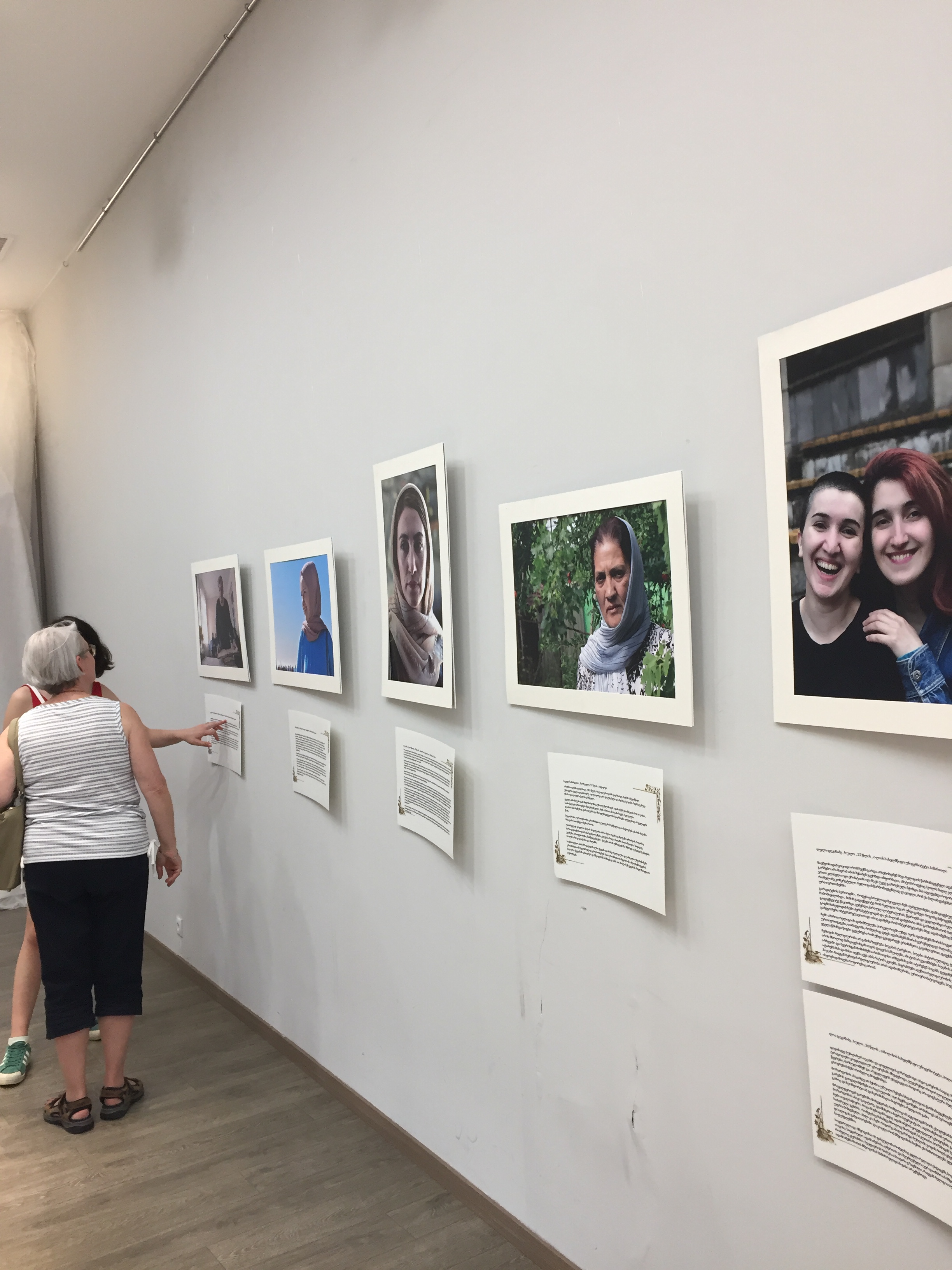
We ended up at the opening of a photography exhibition, organized by Bishop Rusudan (Malkaz’s niece) and completed by two young women, Nano and Nanuka. They photographed and interviewed Georgian women from different faiths and asked them to tell stories about their work. The images of the eleven women — which include our dear friend Leanna and the mother of the Muslim cleric we met the previous day — are strikingly beautiful, accompanied by stories which I couldn’t read but could imagine.
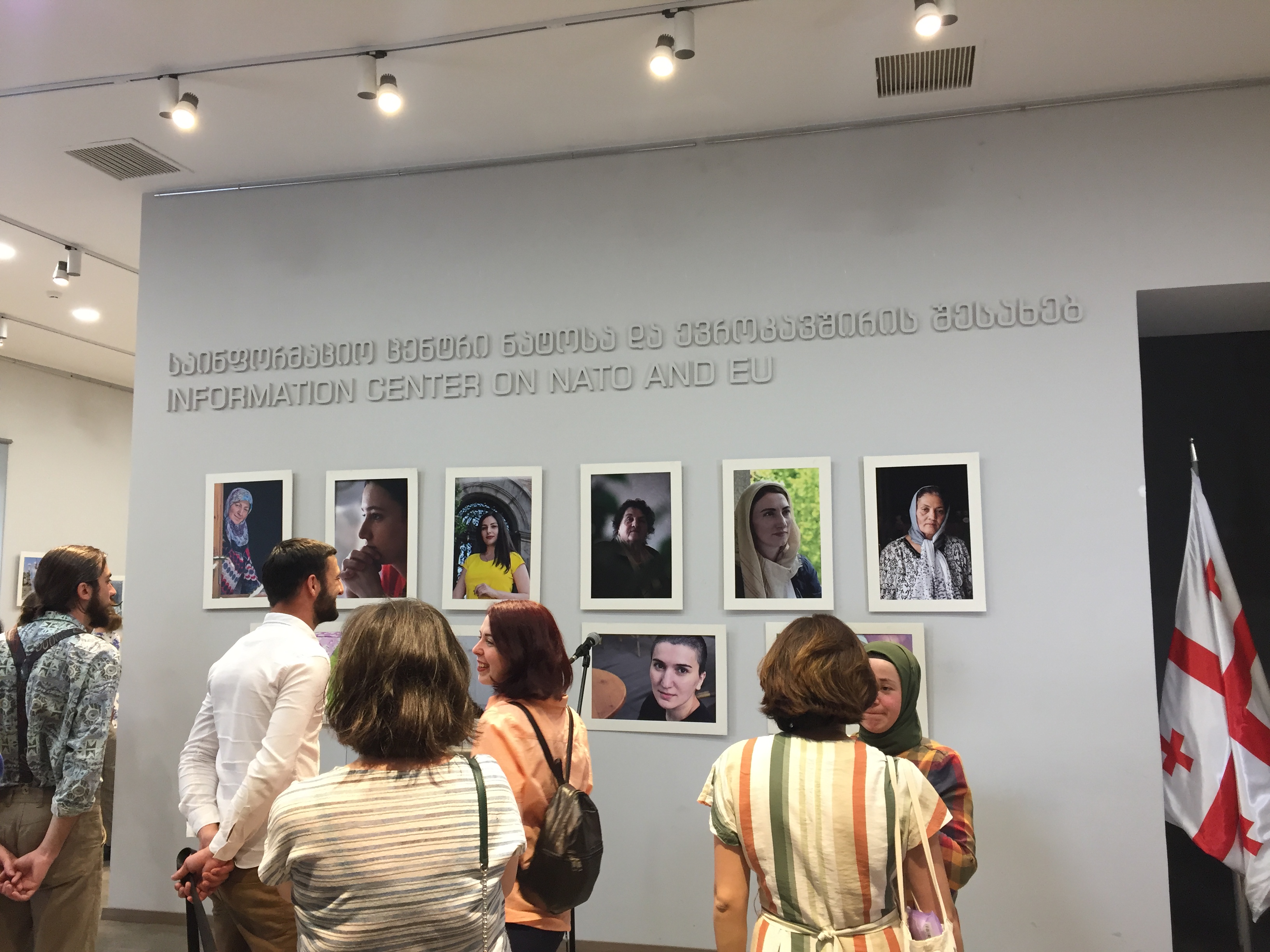
The exhibition was well-attended, and the women who were interviewed and photographed got the chance to speak to the crowd. Rusudan was kind enough to translate for us. All of the women talked about how important it was for women’s stories to be heard, for women of different faiths to be heard, and how grateful they were to be part of this conversation.
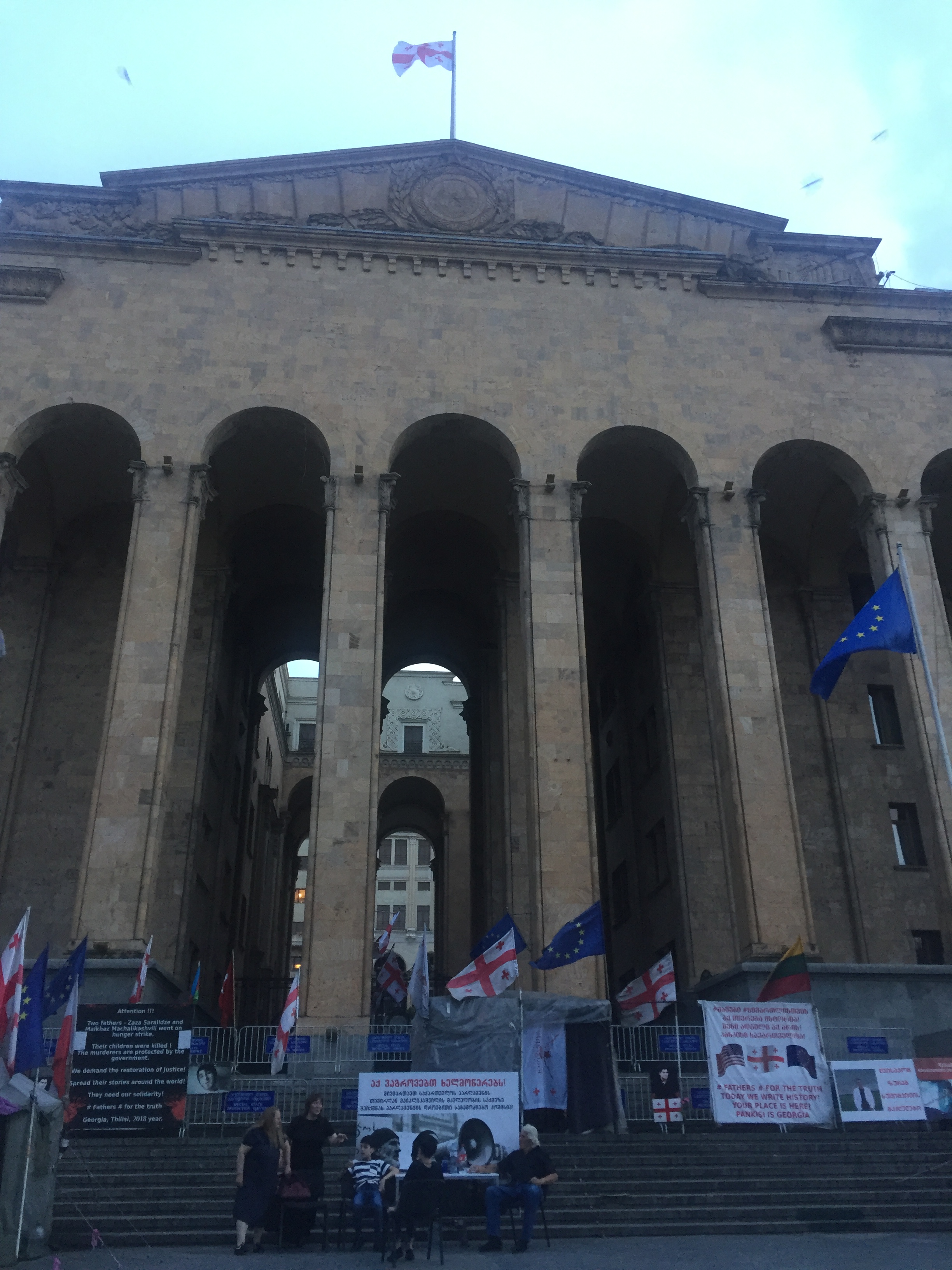
Later that night, on our way to dinner, we would walk past the Georgian Parliament building, where in just three days, protestors against Georgian’s continually tense relationship with Russian would be attacked again. 240 people would be hurt.
It matters what stories are told. It matters whose stories are told. And it matters who tells the stories. I am grateful for the stories that I heard today, and those who are brave enough to tell them and live them.
Pentecost in Five Parts (Day 3)

1) Eucharist, 9:30 AM

“When the day of Pentecost came, they were all together in one place.” Acts 2: 1

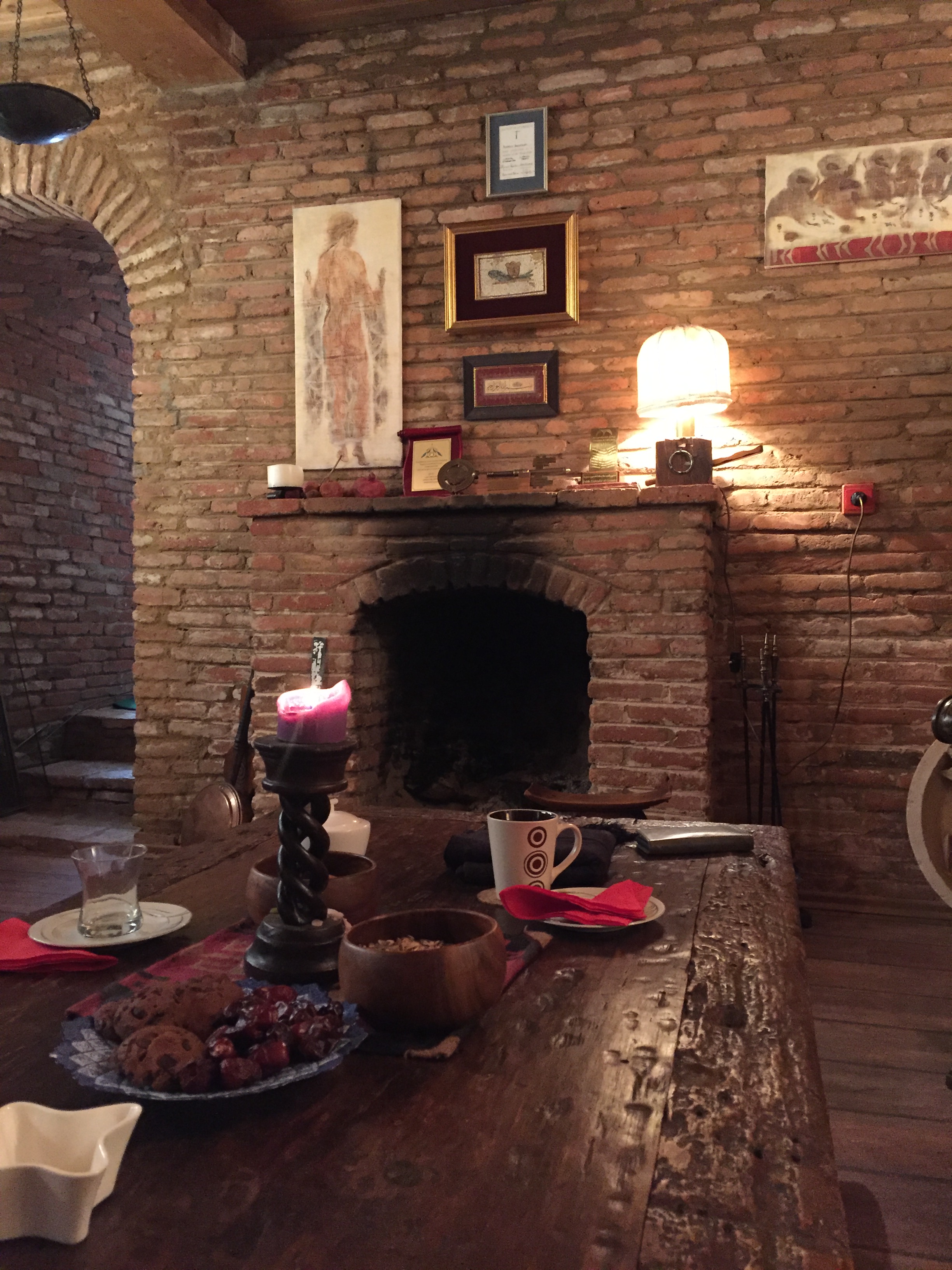
We begin the morning with English Eucharist at Bishop Malkhaz’s home. As soon as we walk through the gate, we are greeted by five dogs, all in various stages of adoration and/or protection, and after some calming and cooing, we head into the basement. I find myself in the ideal study, cave-like, all warm tones and cluttered bookshelves. The exposed brick and deep brown couches — lit by sunlight filtered through tan curtains, a few lamps, and candles on stands — make the study comfortable and homey, at least for this bookish English professor. We have Eucharist in Malkhaz’s private chapel, where we all sit on green cushions, looking at a small altar in front of a beautiful painted icon. Ala leads the readings, Paula does the reflection, and Malkhaz is just one of the congregants until it is time for the Eucharist, at which point he ducks behind a door and becomes a bishop. He remains barefoot, though, as he give us the wine and bread of Christ. Afterwards, we sit in the cozy study, drinking tea with rock sugar and talking about Georgia’s (literal) battle for LBGT rights, an issue about which Malkhaz spoke out in 2013 and lost his role as Archbishop. Ala brings the newest (and potentially temporary) member of the family to visit, a little black puppy, who, while we talk, curls up in the chapel on the green-cushioned bench, sleeping under the eyes of a patient Christ.


2) Pentecost Service, 12 PM

“All of them were filled with the Holy Spirit and began to speak in other tongues as the Spirit enabled them.” Acts 2:4

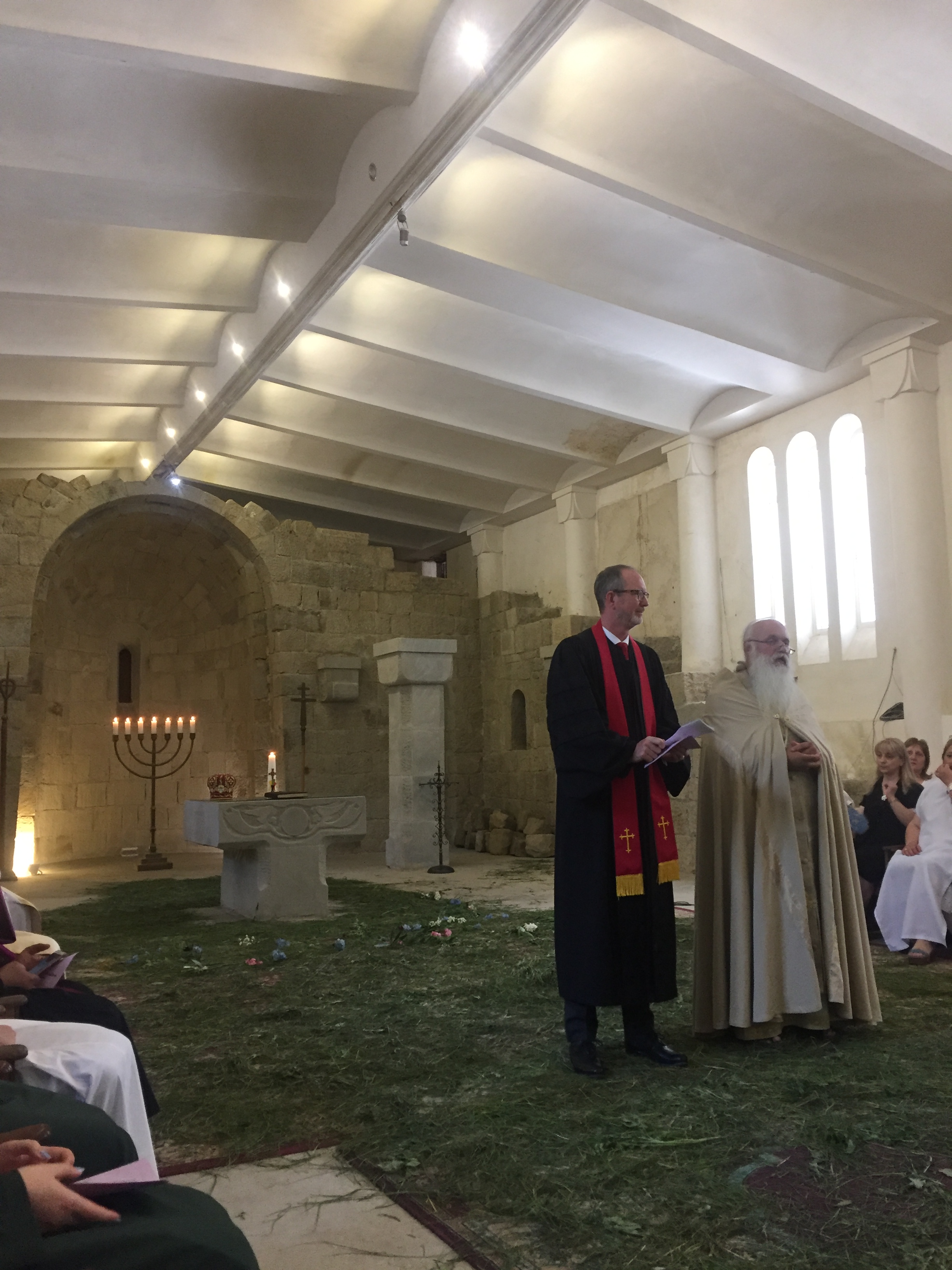
I get my first look at Peace Cathedral as we process in for morning worship on Pentecost. The carpet of the central aisle up to the altar is covered with green grass and freshly cut flowers, and the entire chapel smells like springtime. Becky and I sit in the front row of the congregation, while Paula and Scott, clad in their clergical garb, sit with Bishops Malkhaz, Rusadan, and Ilia, as well as the deacons and other visiting clergy. The call to worship is led by a little girl in leg braces, sitting next to her mother the organist; she speaks in Georgian with the clearest, purest voice, and though I don’t know the language, I still feel called to worship. During the Acts reading, different congregants stand up and read pieces of the text in different languages. The Eucharist is read in both Georgian and English, and I am struck by the beauty and inclusivity of the words. The bread is broken for all who love God — whether Christian, Muslim, or Jewish — that someday we might be one. It is broken for polluted creation, for refugees, for the hungry, for the broken-hearted, for the persecuted, for the forgotten. The bread is broken for all of us, and all of humanity, and all of creation; no one and nothing is left out. As it should be.


3) Yezidi Temple Festival, 2:15 PM

“Now there were staying in Jerusalem God-fearing Jews from every nation under heaven. When they heard this sound, a crowd came together in bewilderment because each one heard their own language being spoken.” Acts 2:5

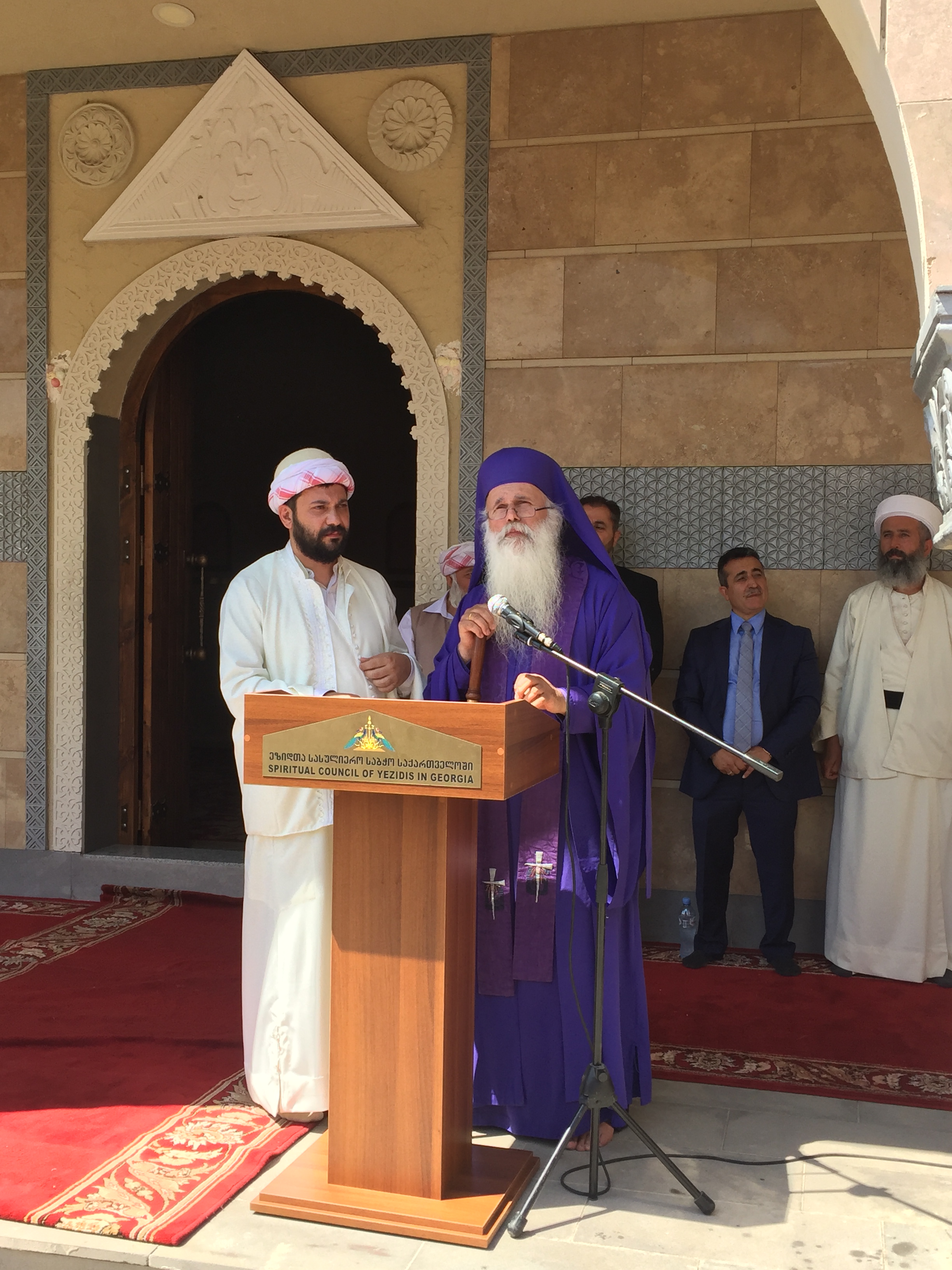
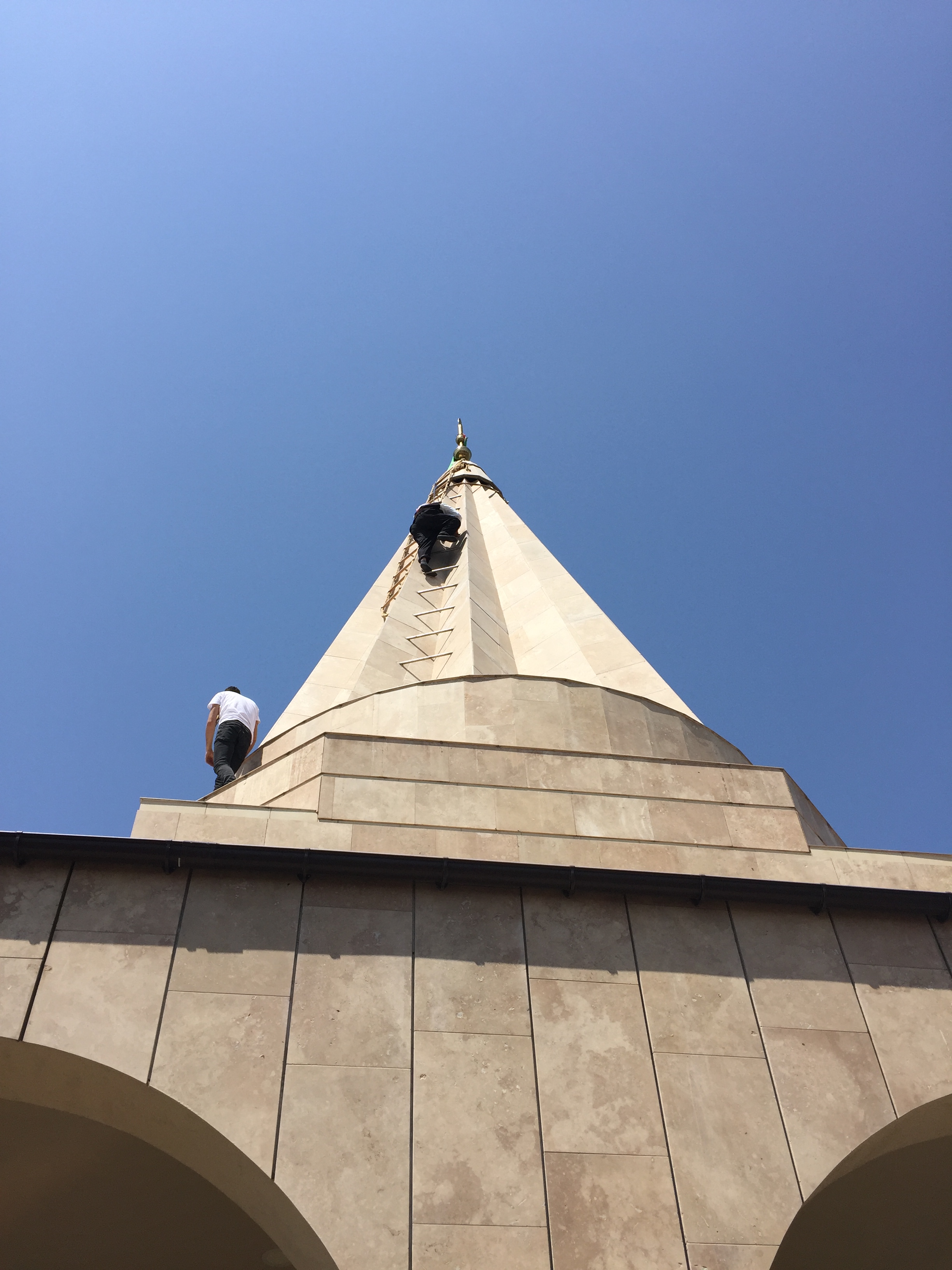
We arrive at the Yezidi temple late and are quickly ushered to a space in front of the temple, where a flute and drum are being played. A line of men stands in front of the temple, all seriousness. I snap photos as quickly as I can, feeling very much the photojournalist that I am not as I alternate between a digital camera and my iPhone. I don’t know who I am taking photos of or what anyone is saying, but the occasion simply feels momentous. Brightly colored umbrellas are passed around to ward off the warm sun, so the crowd becomes multi-colored. Waters are also handed out, which is appreciated as I can feel the sweat slipping down my back. Various speakers are called up, including Malkhaz, and their words are translated either into Yezidi or Georgian. Seeing movement, I look up, and a young man climbs the steeple of the temple and hangs a flag. Everyone cheers. Another ceremony occurs in the peace garden, and still another ceremony happens in the newly-christened Yezidi academy, which will welcome its first cohort of twelve students this summer.

At the reception (at which there is, of course, wine and cheese), we meet Mirtagi, a Muslim cleric and good friend of Malkhaz. To speak with him, we need two rounds of translation. The stately and handsome cleric speaks to a smiley young man with a very expressive face, who translates for Malkhaz, who translates for us. Conversations like this require patience, short sentences, short stories, and ultimately trust that your message will be relayed correctly. They take time and confusion. Despite their difficulty, these are the important conversations: with Georgians, Muslims, Yezidis, everyone. We have to cultivate patience, trust, and hope. And maybe some bewilderment.


4) Yezidi Dinner, 6:00 PM

Amazed and perplexed, they asked one another, ‘What does this mean?'” Acts 2:12

At dinner, we accidentally choose the table right in front of the speakers, which isn’t a problem until the music begins. Before long we just reconcile ourselves to our (hopefully) temporary deafness, as we eat — there are no shortage of feasts in Georgia — and drink. At various points, all of the men stand up, for reasons no one can really describe. But this is all just a precursor to the dancing. Three women begin the dancing, standing in a line in the middle of the floor, one holding a handkerchief. It’s a sort of line dance that moves in a simple pattern forward and back and to the right. The women in the line link pinkie fingers and move their arms to match their footwork. Soon, three young men come and join them, taking the handkerchief. Before long, the dancers fill the floor in a circular, then snaking pattern. Some men — young and old — add flair to their movements, while the women look cool and aloof. American and Georgian students attempt to join in, with only some success, before starting their own less formal dance party near their table.

The songs are long, ten, fifteen minutes; at some point, a drum comes out. I do not dance, nor do my colleagues in clerical robes, but I am utterly taken with the movement, the song, and the clear tradition of this dance. I cannot tell who on the dance floor is from Germany, Georgia, Iraq, or any number of other countries where Yezidi make their homes. They move as one, and I wonder how often they get to move in such a way, at least on this scale. The Yezidis are an ethno-religious group, closely bonded, exclusive yet compassionate. Their culture, religion, and traditions are what tie them together, despite their physical distance and despite how their people are persecuted, oppressed, and exiled. Theirs is a painful story of genocide, attempted assimilation, and the psychological ramifications of chronic fear, yet none of that is present in the faces of those dancing with their extended family.

5) Post-dinner Debrief, 8:15 PM

“Some, however, made fun of them and said, ‘They have had too much wine.'” Acts 2:13

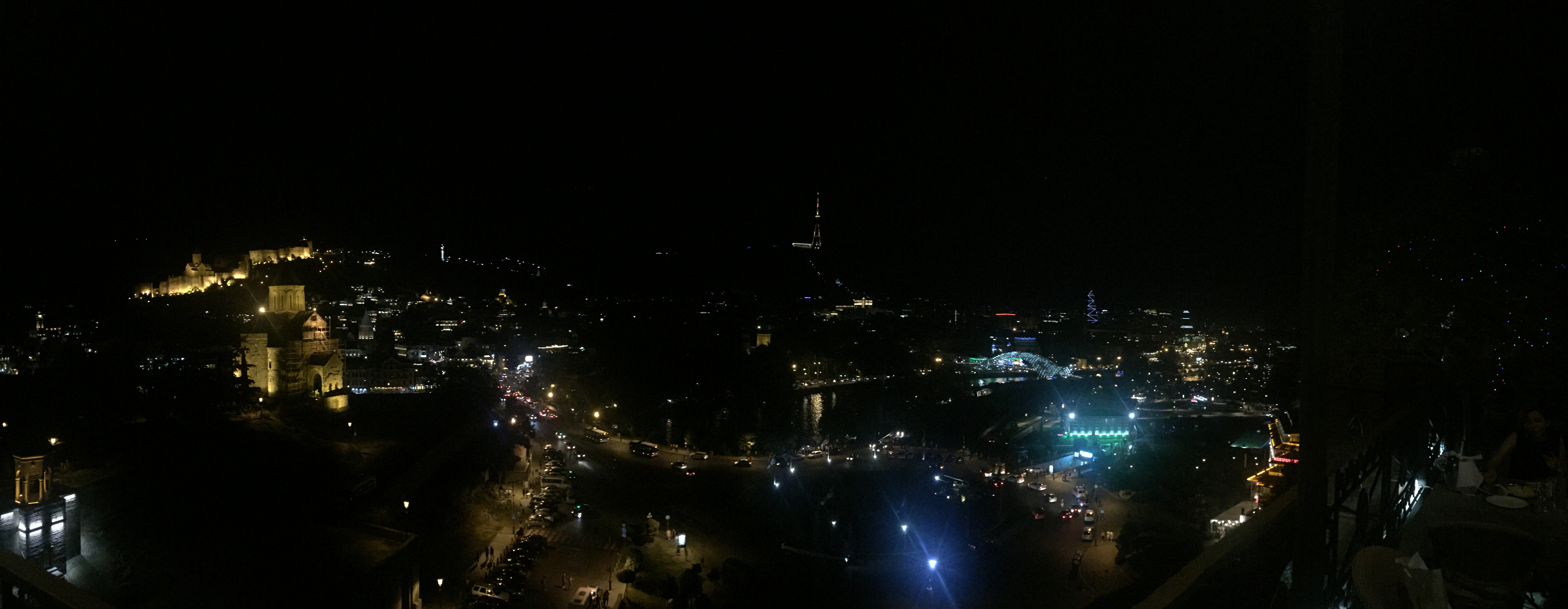
We are the first to leave the Yezidi party, and we all leave partially deaf. Malkhaz suggests we get drinks and process our Pentecost day. We arrive at a restaurant with a rooftop patio that overlooks Old Town Tbilisi, with views of the Mother of the City, the Peace Bridge, the old City Wall, and the terraced buildings of Old Town. We’ve spent so much time out of Tbilisi that this is our first proper look at the downtown area, and I’m enamored with its beauty. More wine is ordered, as is more food — ostensibly for our driver, who hadn’t eaten dinner, but also because the philosophy in Georgia is the more food, the better. Malkhaz assures us he has only ordered a “quarter” meal. It starts to rain a bit, so we move inside, where the view from the open windows is just as good but we get the benefit of hearing the pianist. We talk about the challenges and beauty of Yezidi culture, we puzzle and laugh over our experiences and uncertainties, all while we drink three bottles of wine, eat tomatoes and cucumbers, and watch teenagers take Instagram photos in front of the gorgeous view that twinkles to life as the sun sets on Pentecost.

No, this is what was spoken by the prophet Joel:
‘In the last days, God says,
    I will pour out my Spirit on all people.
Your sons and daughters will prophesy,
    your young men will see visions,
    your old men will dream dreams.
Even on my servants, both men and women,
    I will pour out my Spirit in those days,
    and they will prophesy.
I will show wonders in the heavens above
    and signs on the earth below,
    blood and fire and billows of smoke.
The sun will be turned to darkness
    and the moon to blood
    before the coming of the great and glorious day of the Lord.
And everyone who calls
    on the name of the Lord will be saved.'” Acts 2:16-21

Busy Days in Tbilisi

You may have noticed I’m a few days behind on updates of our adventures in Georgia. We have been kept very busy, so I haven’t had time to update–not in the ways I’ve felt could do justice to our experiences. I will update soon; I have to tell you about Pentecost and the Yazidi dancing and the Gori soup kitchen and old town Tbilisi!

An Eschatological Hike (Day 2)

I’m not really a hiker. People are surprised about this, given I consider Oregon my home place, but hiking combines a number of things that make me nervous: people, exercise, unpredictability, pokey things (like thistles and some bugs), and exercising with people (a.k.a. performance anxiety).
Malkhaz loves hiking, and so when I heard he was going to take us on a hike, I instantly started re-organizing my packing lists and worrying over this particular day. I knew it would be formative, meaningful, spiritually rich, blah blah blah. I knew I would be glad we went. I knew it would be a treasured memory. I just didn’t want to have to make the memory first.

Our first day in Georgia, Malkhaz mentioned that being in nature brings us back to our humanity. I asked him why that was. He replied that nature reminds us who we are, that we are part of the land and the animals. We are dependent on them, and they are dependent on us. He added that being in nature is akin to contemplation and meditation, as well. Now that I get. Only I usually like to find a bench and sit in nature, rather than walk miles through it.

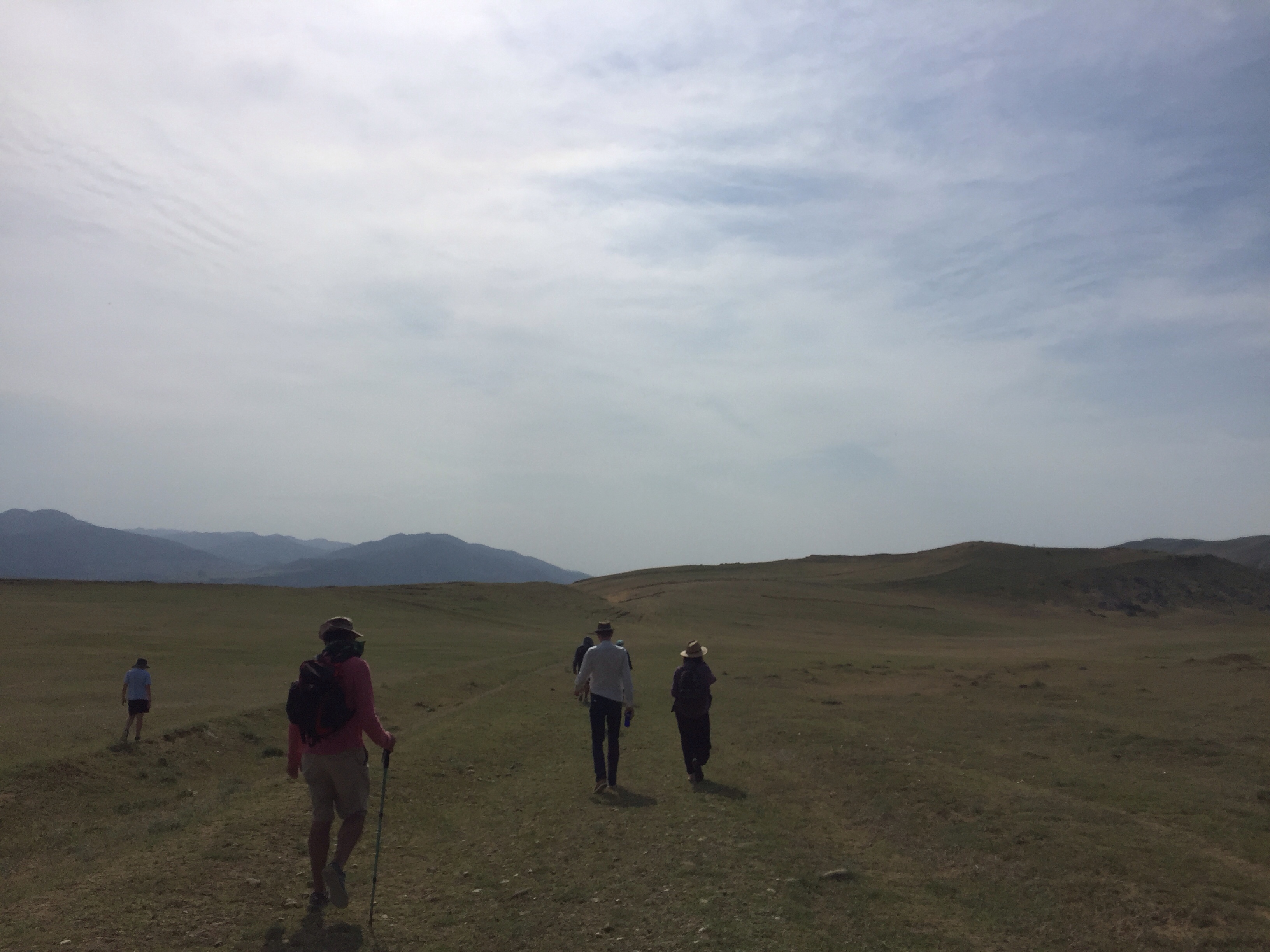
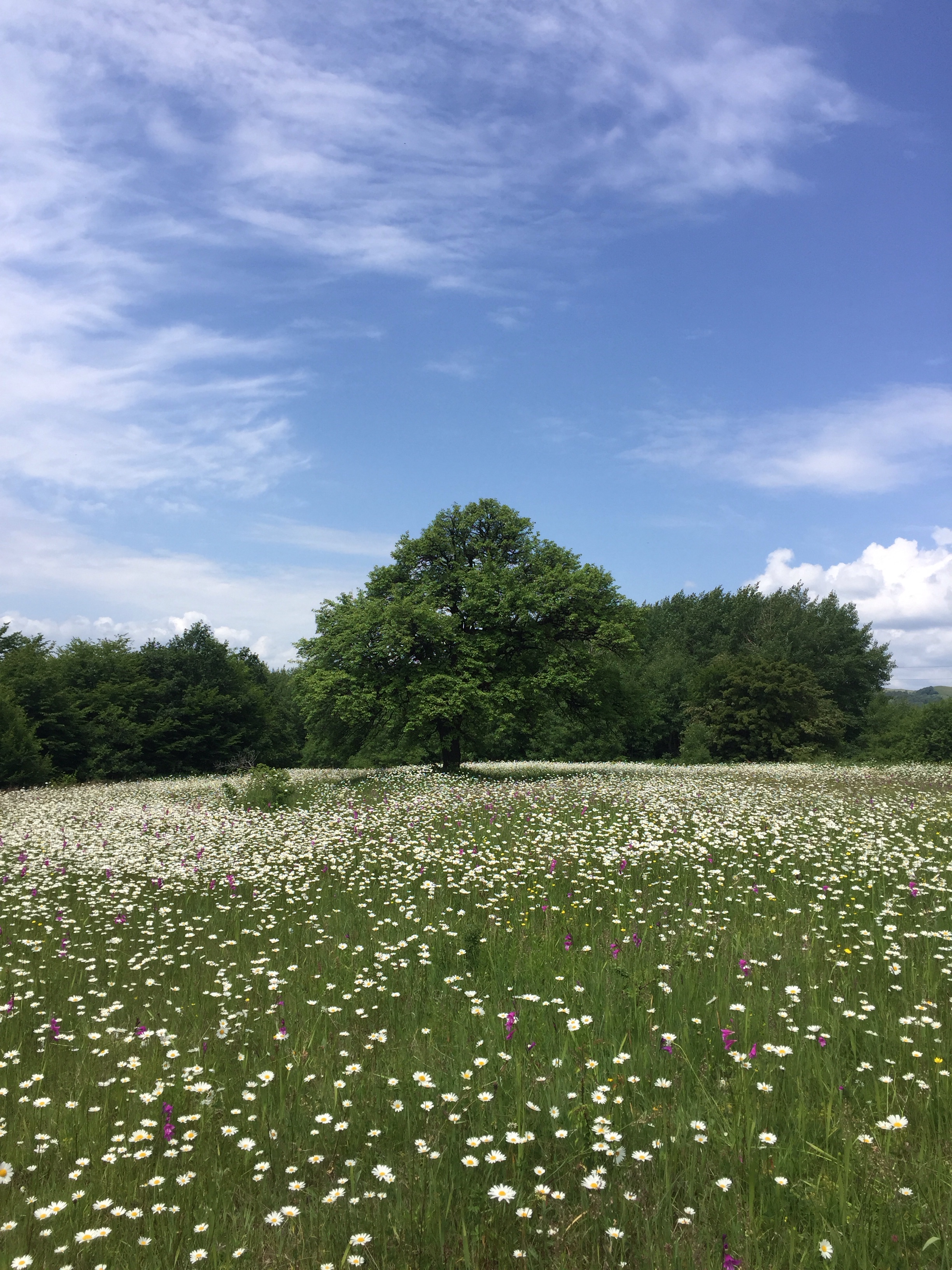
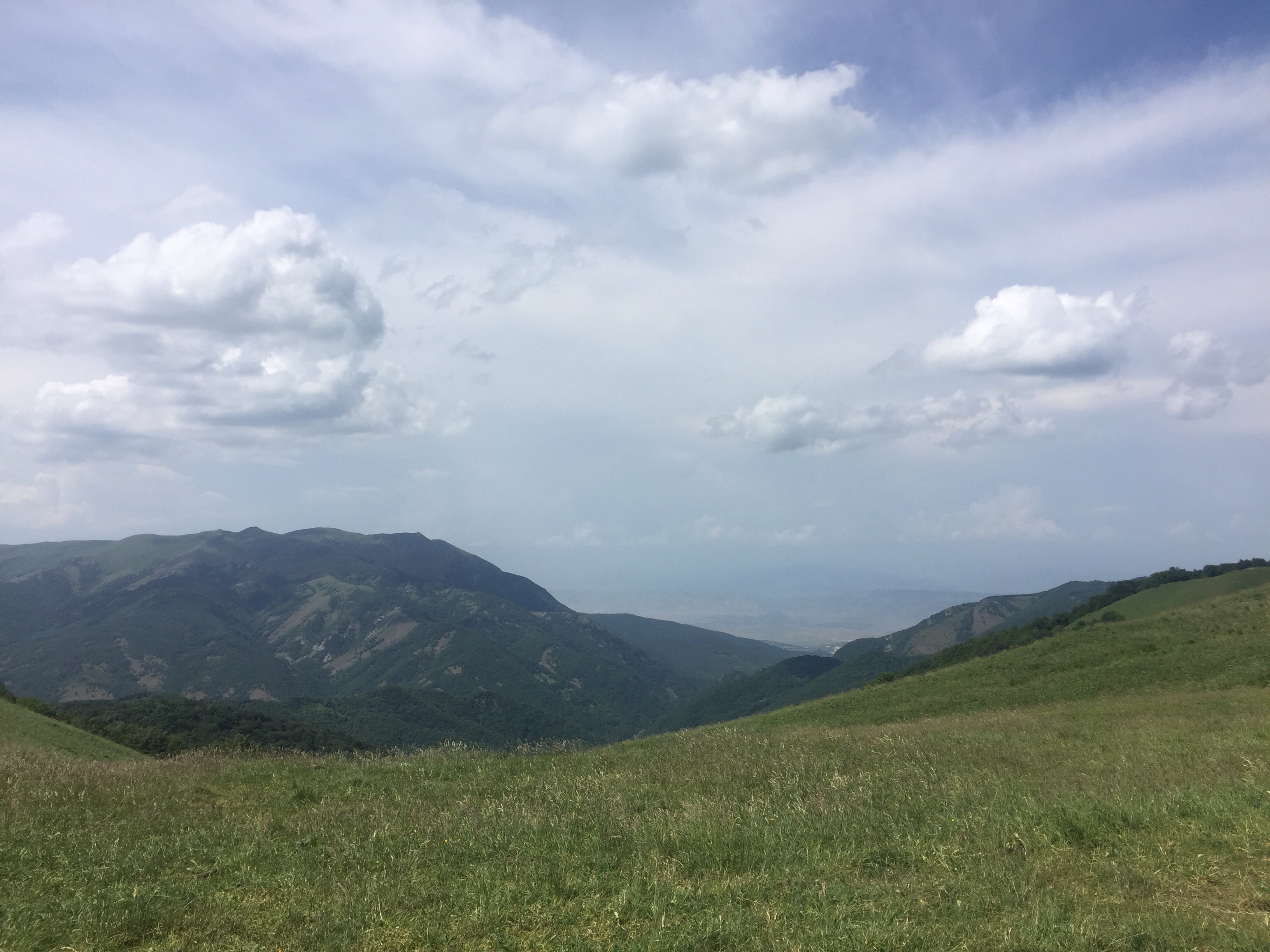
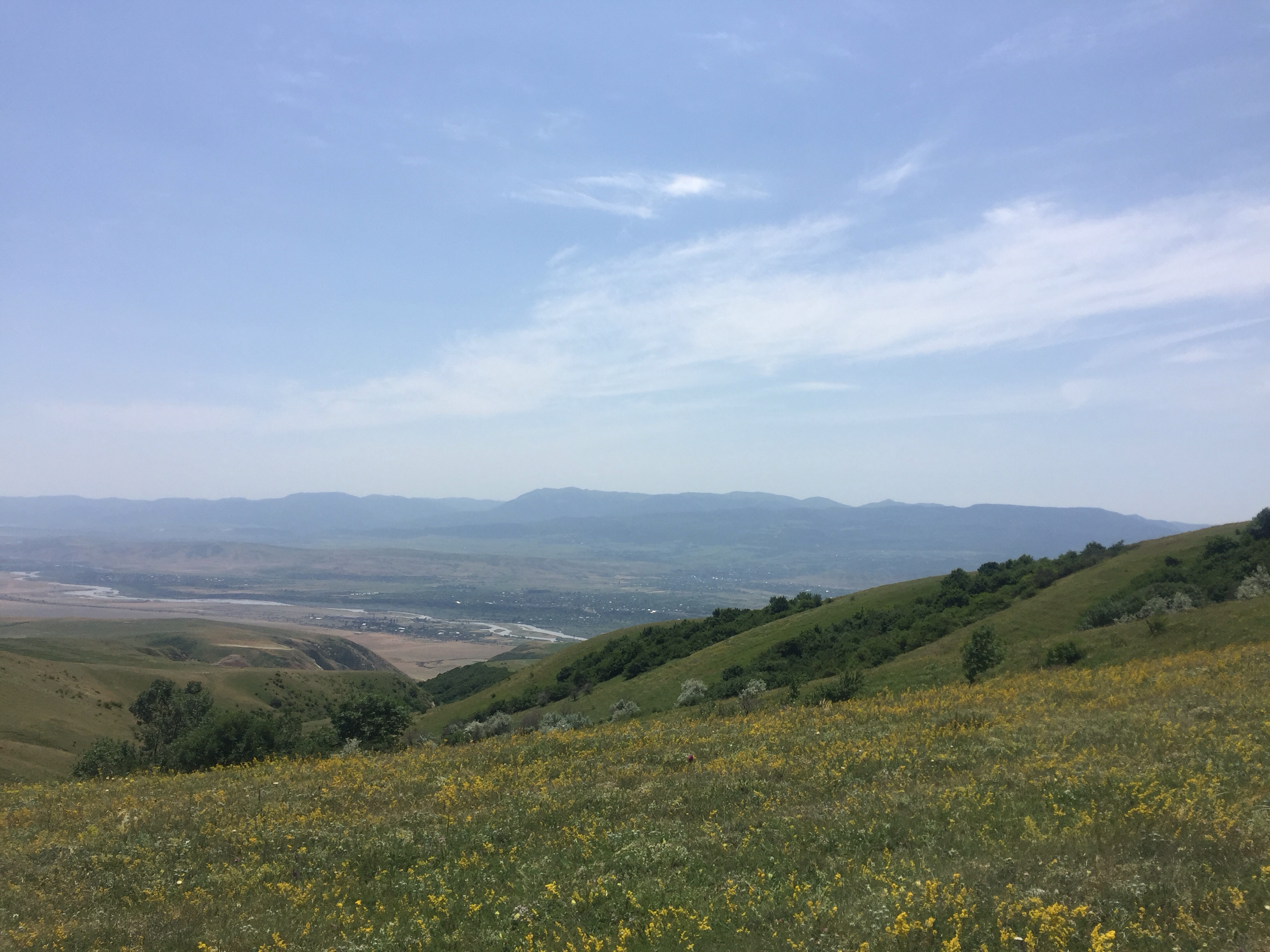
Despite my uncertainty, today we went on a pilgrimage. A traditional pilgrimage, as we walked through various Georgian landscapes. The only constant was the sunshine and the wildflowers in a vast array of colors. And the deep and utter silence, broken only by the rustle of wind through grasses and trees…and the occasional cow mooing.

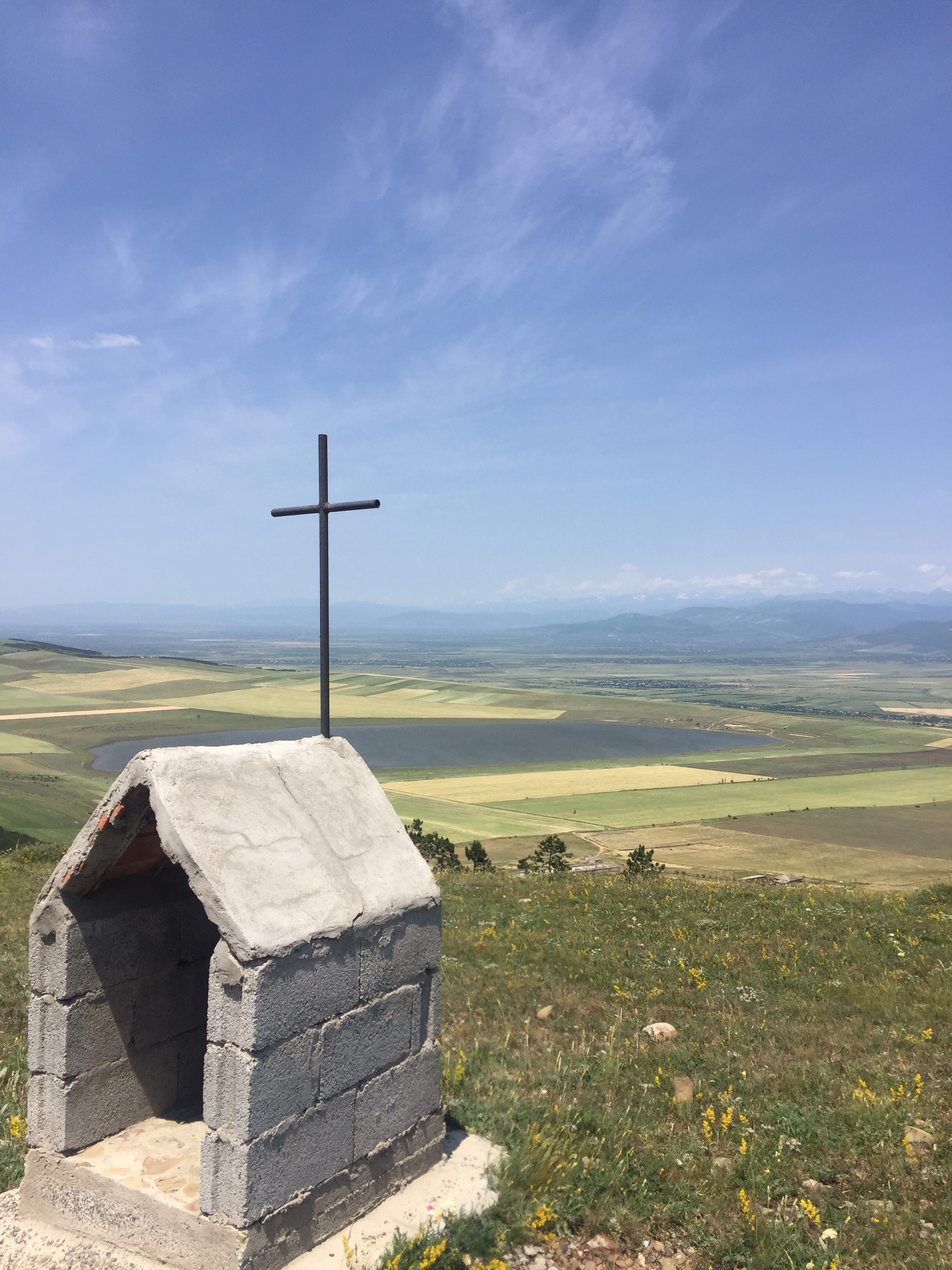
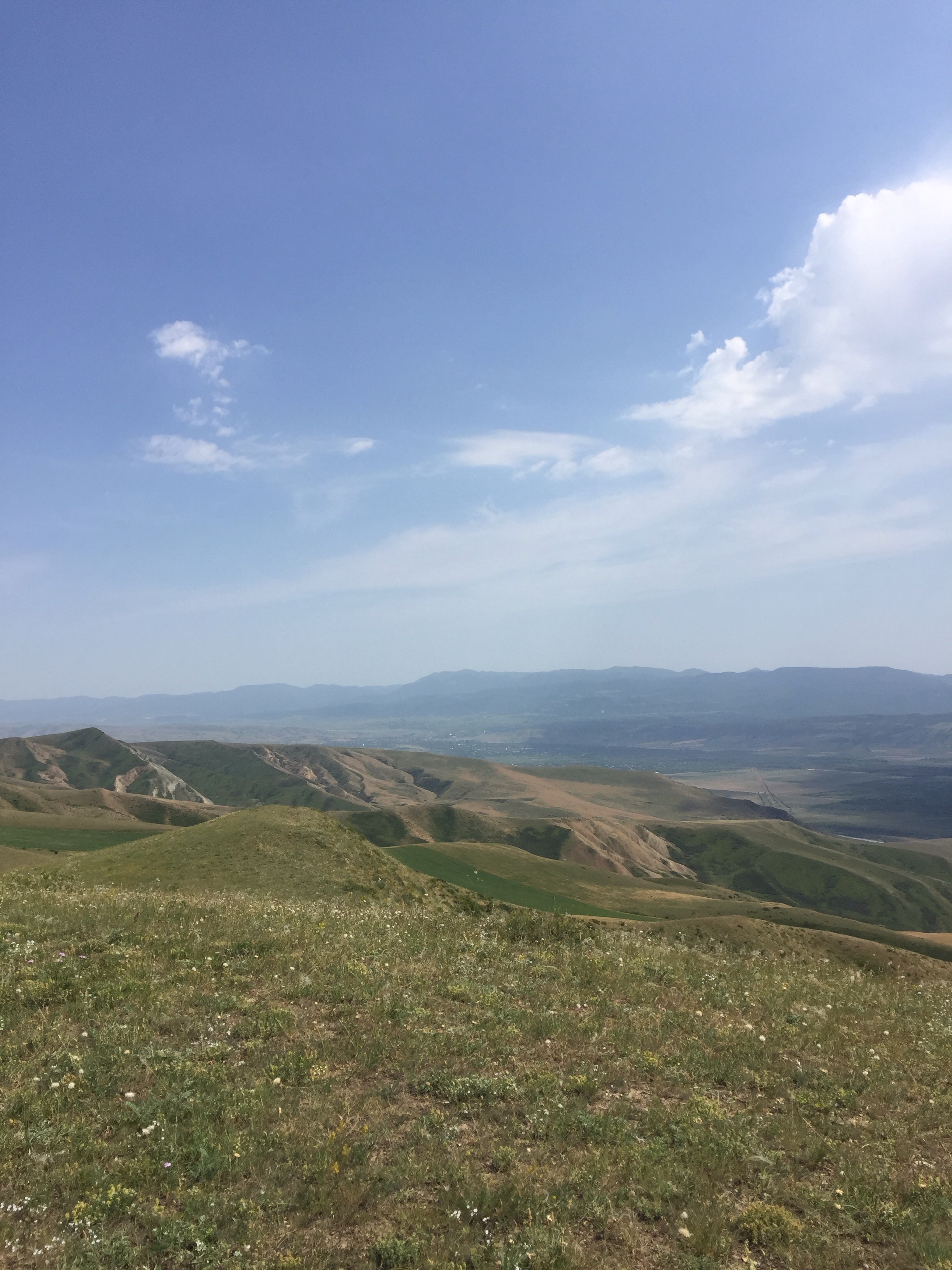
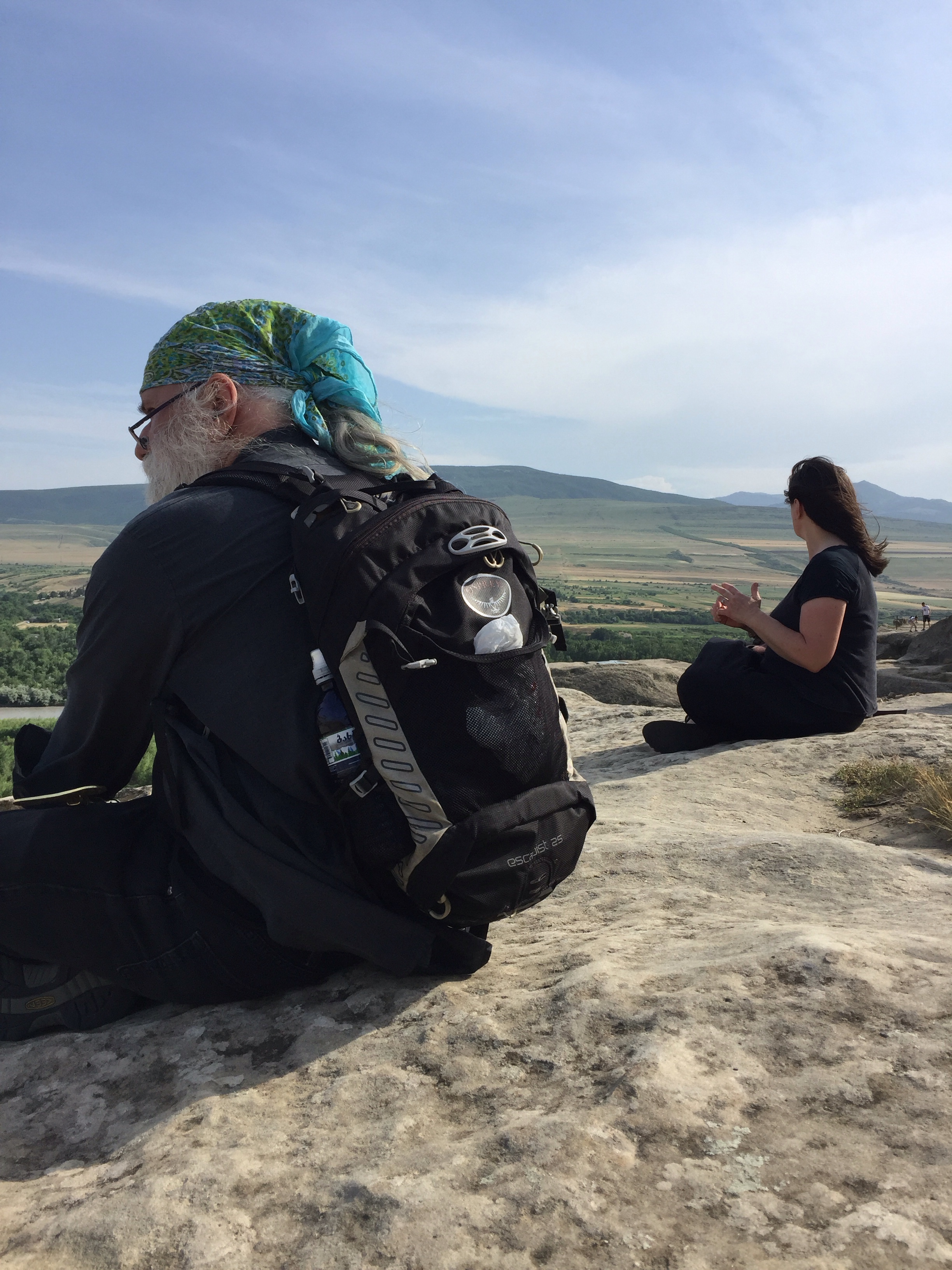
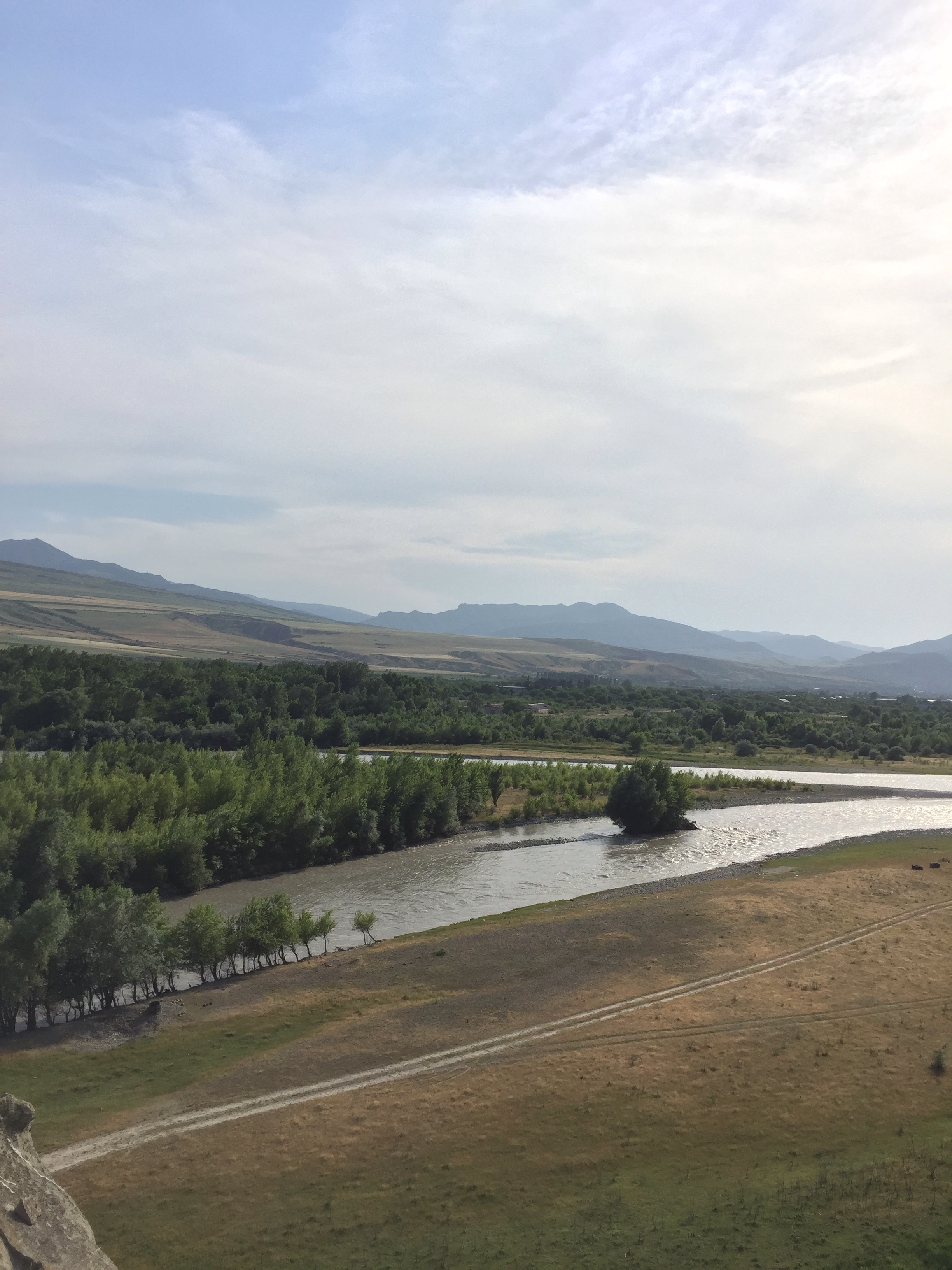
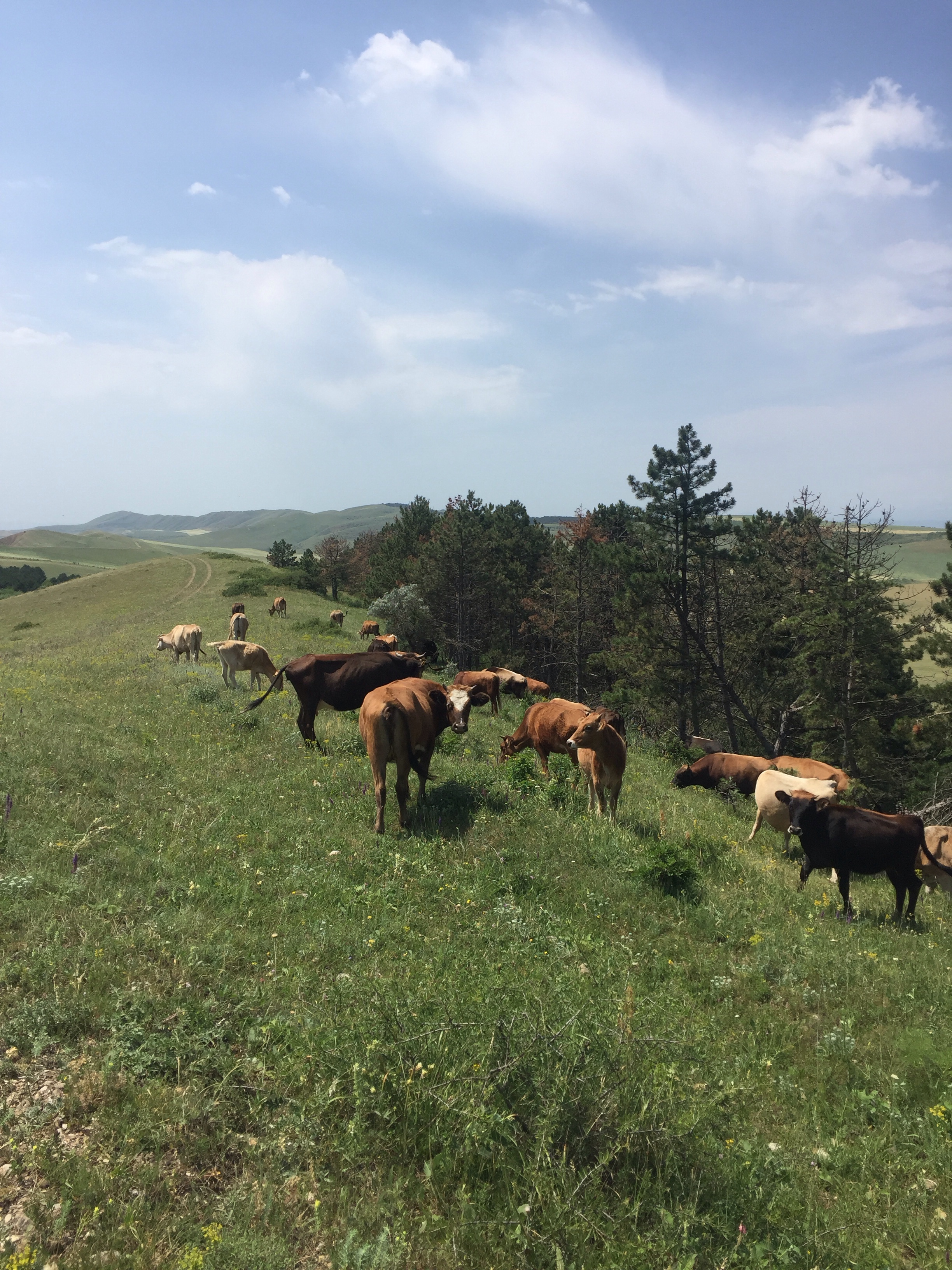
We started at the top of some medium-sized mountains, walking along their ridges with the wind whipping our hair across our faces. From these heights, we could see lakes and towns, and just hints of the Caucasian Mountains. This part of our journey was actually an ancient pilgrimage route, so we gathered stones and placed them in a cross at one of the pilgrimage points. We then ate snacks–almonds, raisins, dates, cookies, pistachios–in the shade, watching a herd of cows eat the trees just below us. A butterfly perched on Malkhaz’s shoulder for a while; they seemed the most comfortable companions.

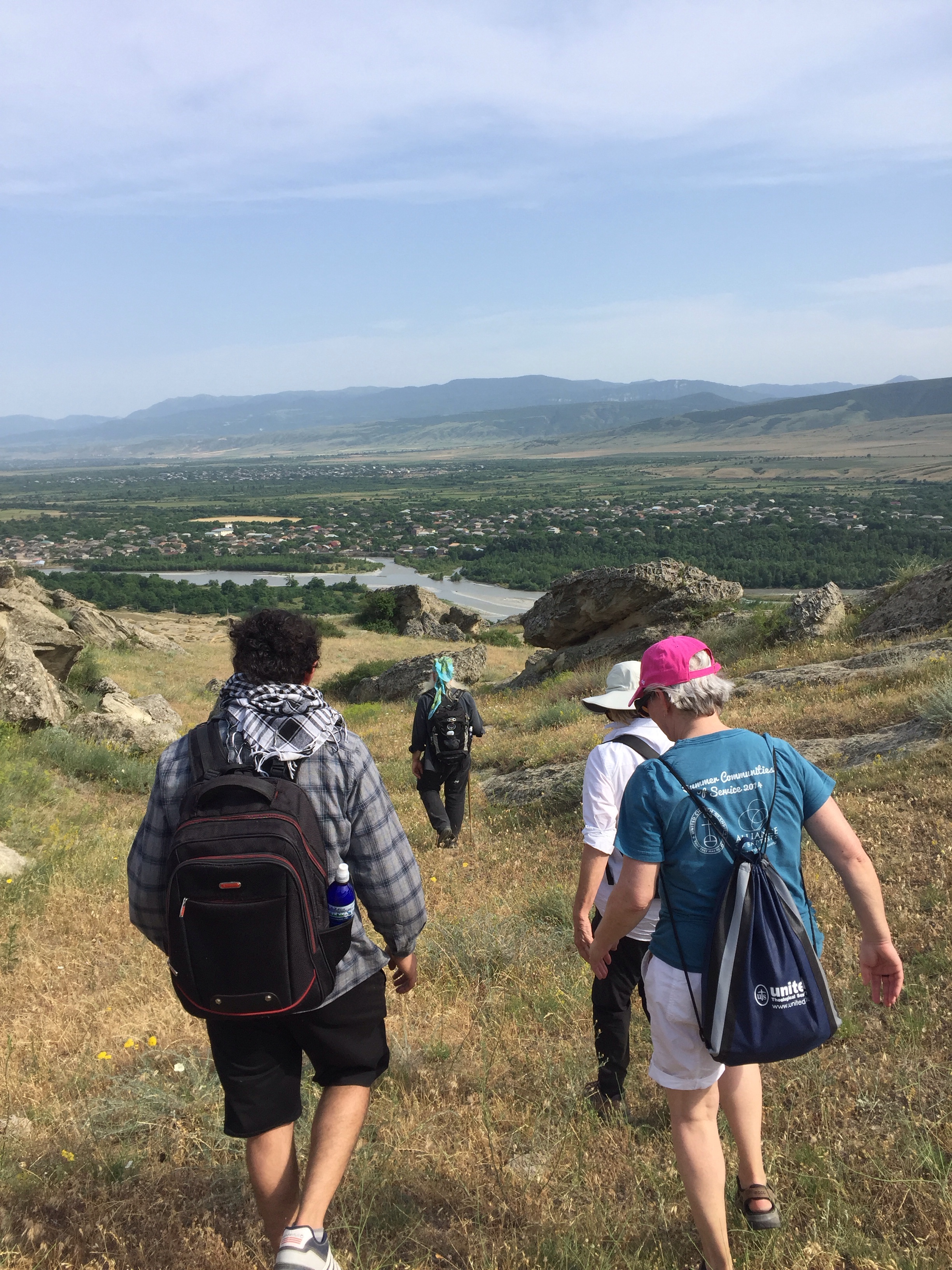
Then we walked down the mountain, carefully watching our feet. We walked into a flat, dry area, where our main companions were grasshoppers of various sizes, shapes, and colors. A giant one flew up and hit my sunglasses. Another one, three inches long, hitched a ride on my shoe. I tried to channel Malkhaz’s calm from earlier, but I’m sorry to say I don’t quite feel as kindly toward grasshoppers as I do butterflies, which is a bias on my part from my days finding grasshoppers in my bed in South Dakota. Even so, I squelched any squealing, and brushed it off as gently as I could. Soon, I started seeing the swirling of grasshoppers that rose up every time my fellow pilgrims and I took a step as a whirlwind, a welcome, a brief disturbance in their silent world, and I felt kinder toward them.

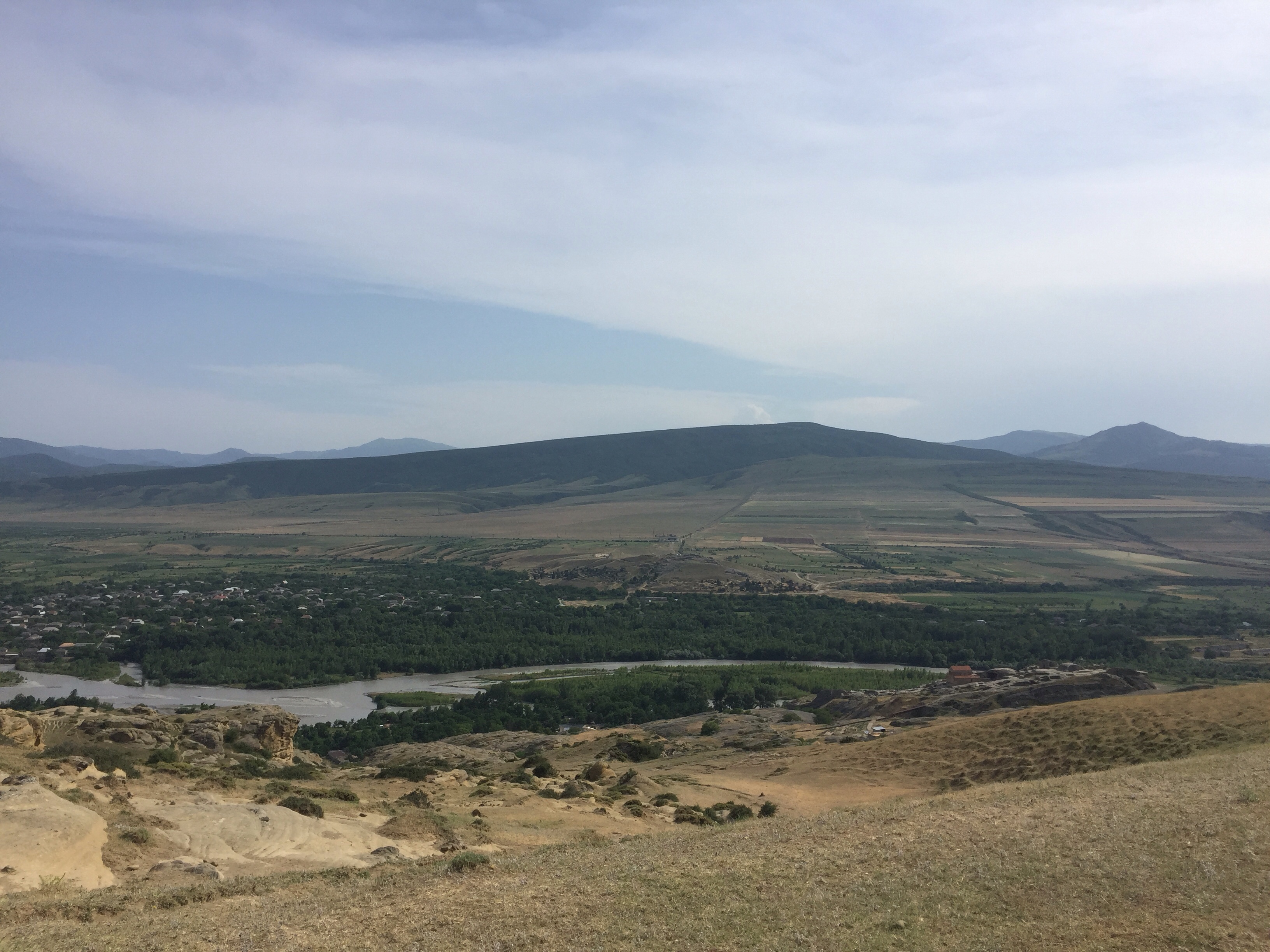
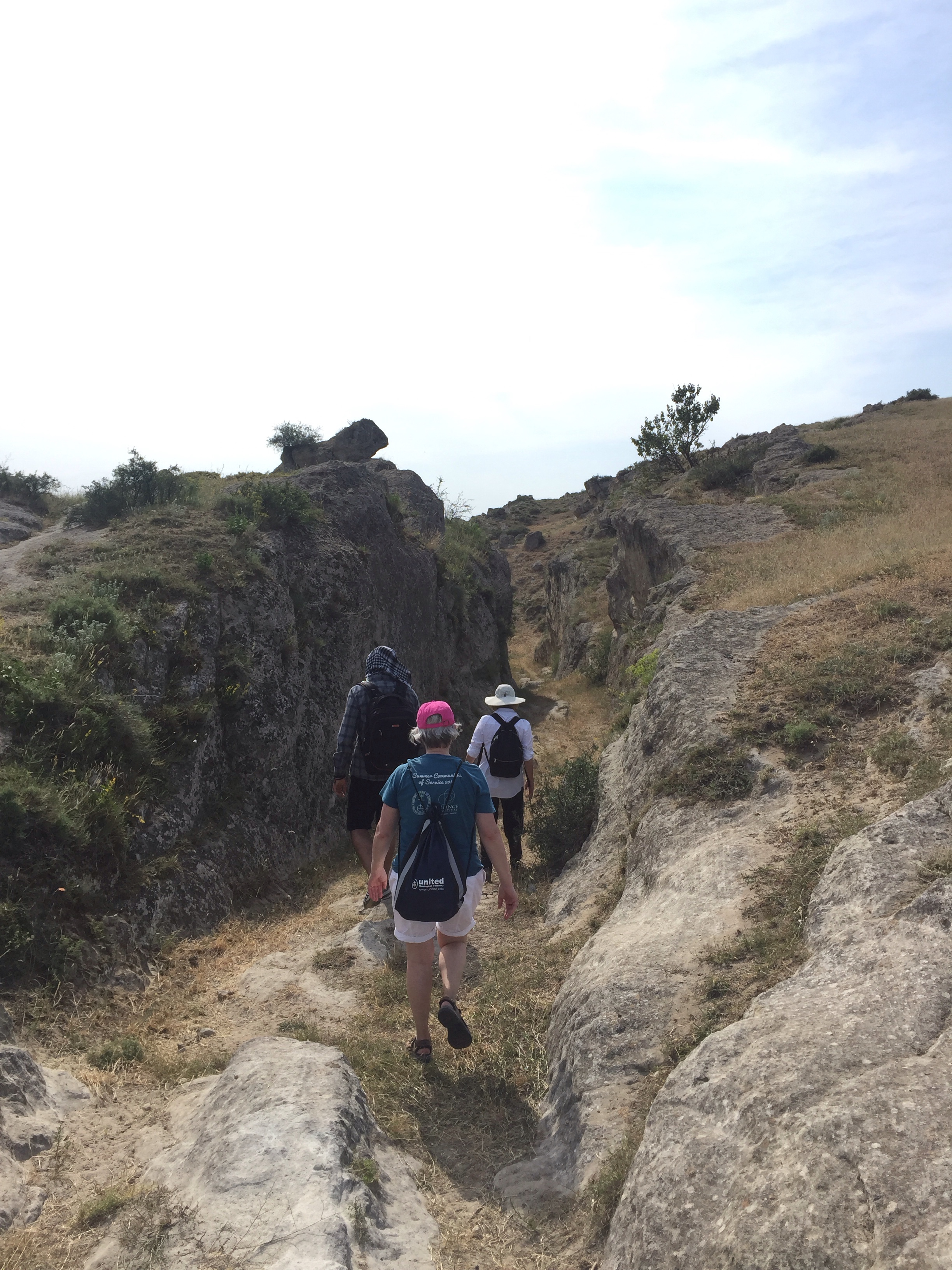
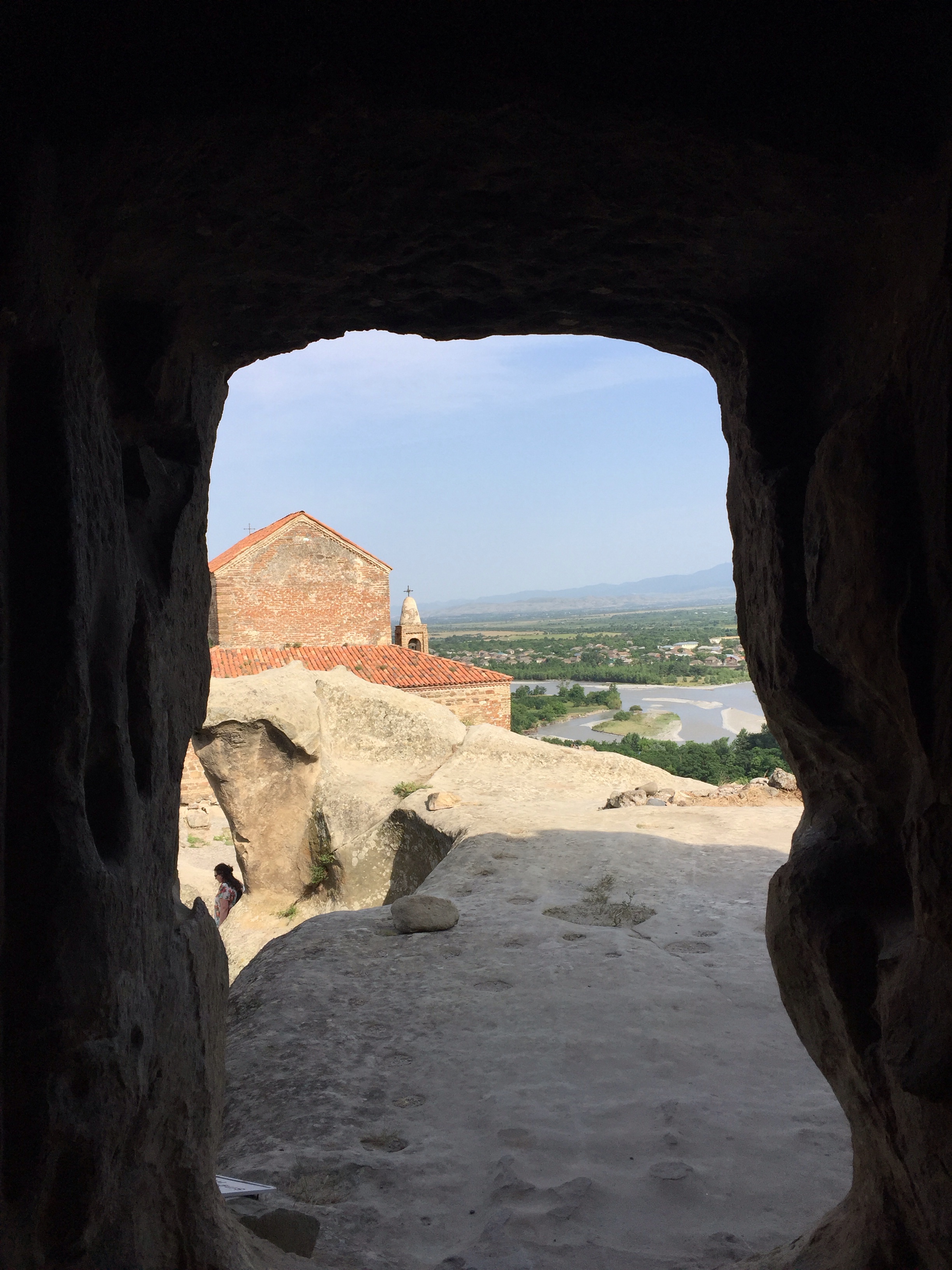
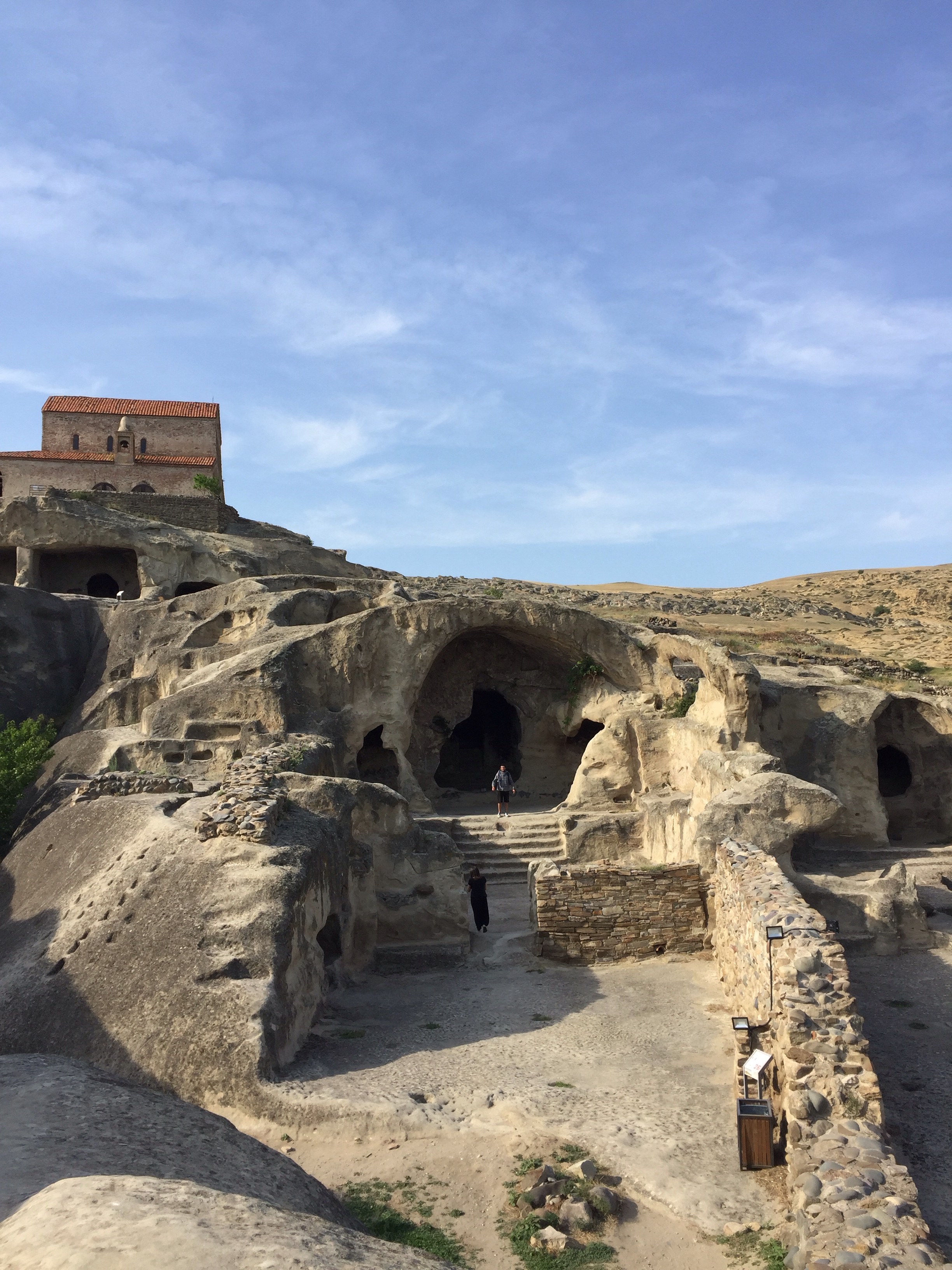
The last section of our nine-mile hike was scaling large rocks, finding narrow routes between them and around them and down them. We ended up in a protected historical site, a town that began to be carved from the rock in 2nd century BC. We rested in rooms that had been hollowed out in the 2nd century AD. The shelves of the pantry still exist, as do the great hall and the amphitheater. This town was thriving through the 13th century, finally dying away in the 1700s. That’s almost 2000 years of life, and now, three hundred years later, we visit it as ancient history.

Malkhaz had said our hike would be eschatological– hot, unpredictable, filled with who knows what…and ending with a feast. And we did feast, at the family home of a young man in Scott’s NYC congregation. They fed us everything delicious: chicken, pork, beef, fish; the best cucumbers and tomatoes I’ve ever had; homemade red and white wine; stuffed peppers and stuffed eggplant; cheese made yesterday and bread that came off the pan today. We ate until we were stuffed, and drank until we could barely string together another toast to the family.

The hike, the pilgrimage, was meaningful. I’ll remember it forever, and I’ll be processing the experience for a long while. But that starts tomorrow. Tonight, my calves are burning, and my feet are dirty, and I’m worn out from the longest eschatological hike I’ve ever been on.

However, here is one immediate takeaway from today’s adventure, no processing required:

If all hikes concluded with a wine-soaked feast around a multilingual table, I’d be the best and most enthusiastic hiker you know.

Expanding Church (Day 1)

Yesterday, we celebrated a wedding anniversary, and in doing so, celebrated a church.

Not a traditional church, though Malkhaz Songulashvili certainly has one of those in Tbilisi’s Peace Cathedral. But one day in the presence of Malkhaz and the other people of Peace Cathedral can challenge you to think beyond what a church, congregation, or faith community means. Our definitions might be too small.

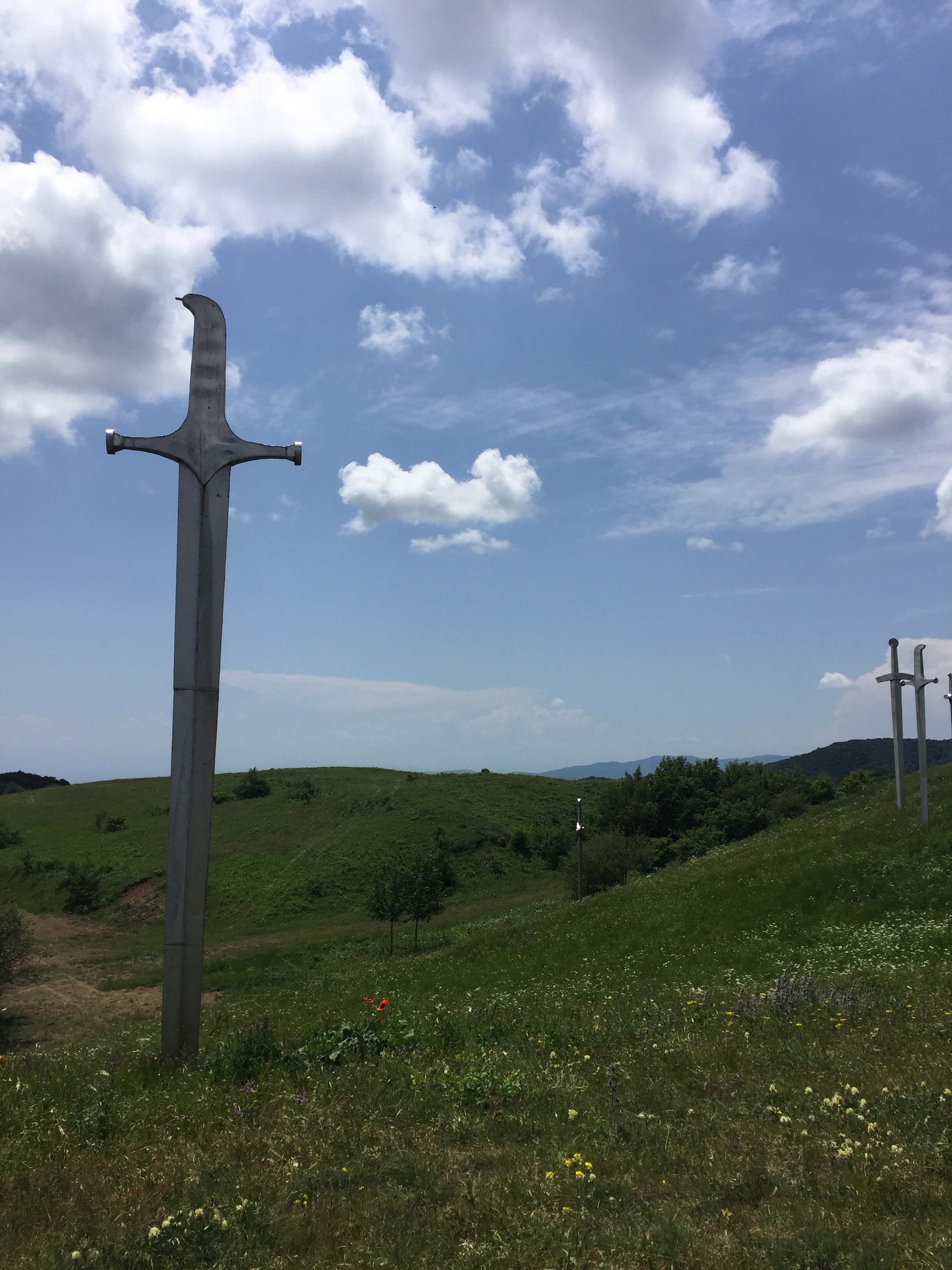
Yesterday was Malkhaz and Ala’s wedding anniversary. Eleven years ago, they went to an amphitheater at the top of a mountain in the Georgian countryside, surrounded by giant metal swords sheathed in the ground that are a striking monument to a significant 13th century Georgian battle. They were also surrounded by some 500-700 friends (numbers vary depending on who you ask) who journeyed across miles and country borders to celebrate the union of two exceptional people.

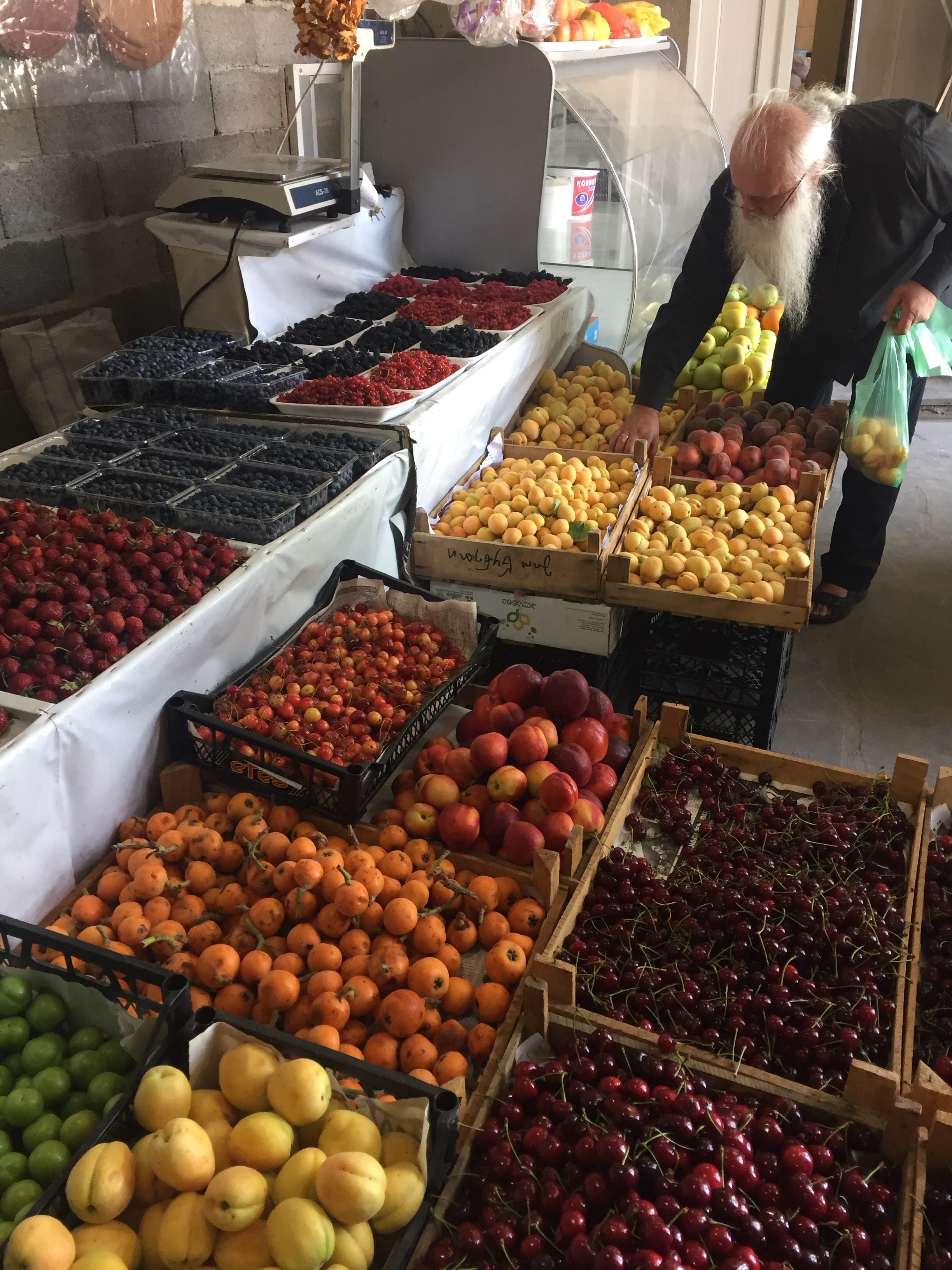
Every year, they go back to that amphitheater, inviting friends to toast to another year of love and ministry with red wine from juice bottles, fresh bread and cheese, and vegetables and fruit bought from a village on the way to the site. We were among those people this year.

I looked around at the hodgepodge of people: family, deacons, friends, ministry partners, American students from the state of Georgia, and our small team. Children braided wildflowers into each others’ hair. Malkhaz had a sense for when a glass of wine was empty. A lovely woman brought around a traditional Georgian cake, and everyone took a fraction of it. We were having church.

I’ve just met Malkhaz but everything I know about him points to this fact: he is constantly expanding the concept of a faith community. All of his work has brought people together rather than separating them. He teaches comparative religion at the university in Tbilisi, and he acts out that scholarship in his ministry at Peace Cathedral, attending iftars with his Sunni, Shiite, and Sunni Muslim neighbors; having close relationships with the Jewish communities in Georgia; worshipping and celebrating with the misunderstood and constantly persecuted Yazidis; speaking out publicly against the abuse suffered by the LGBT population in Georgia and Russia (and paying a price for his boldness).

These are not overtures to convert these populations in any way, but rather to show them true fellowship and partnership in the name of Jesus. Malkhaz’s faith motivates him to spend his life in service of all people, both those who believe like him and those who believe differently. He has joined with others who want to do the same, and so the work goes beyond him, as his two hands are supplemented and supported by his community of faith in Tbilisi and all over the world.

One more story: the Songulashvili household is home to, at last count, five dogs. These dogs weren’t asked for or expected, but they came nonetheless. When asked about the dogs, Ala is bemused, saying it is Malkhaz’s fault. For instance, someone recently wanted to adopt a dog without its sibling, and Malkhaz said no. He needed the dog to go to a good home, a safe home, a thriving home. So, until then, his family will take care of the pup.

I don’t know Malkhaz well, but I get the feeling that’s how he treats people too, all people: come in, stay here, whoever you are or what you believe. I hope you can find a home where you are safe and loved, and I will help you find one. But for however long you need, you are welcome here.

I think that’s what church is supposed to be like.

Pilgrims

As a writing teacher, I tell my students to never begin their essays with, “According to the Merriam-Webster dictionary…” The rhetorical move is so boring, and it’s rarely helpful to their overall argument. However, I just spent a week in Tampa with 1,600 teachers of writing, assessing over a million AP English Language exams. The exam I scored asked students to apply a particular term to a concept of their choice, and it was clear that some students had NO idea what the term meant — which made for some very amusing essays. All this to say, words have meanings, and it’s important to know what those meanings are — even if you end up challenging them.

In Paula’s emails to our small team about travel logistics, she has called us “Georgia pilgrims.” The phrase is lovely, though each word separately has multiple meanings — Georgia, most frequently referring to a southeastern state known for peaches, and pilgrims, most commonly known as Thanksgiving attendees or those making trips to Mecca. However, clarifying this phrase helps explain what our team will be doing and how we will approach our trip to Georgia.

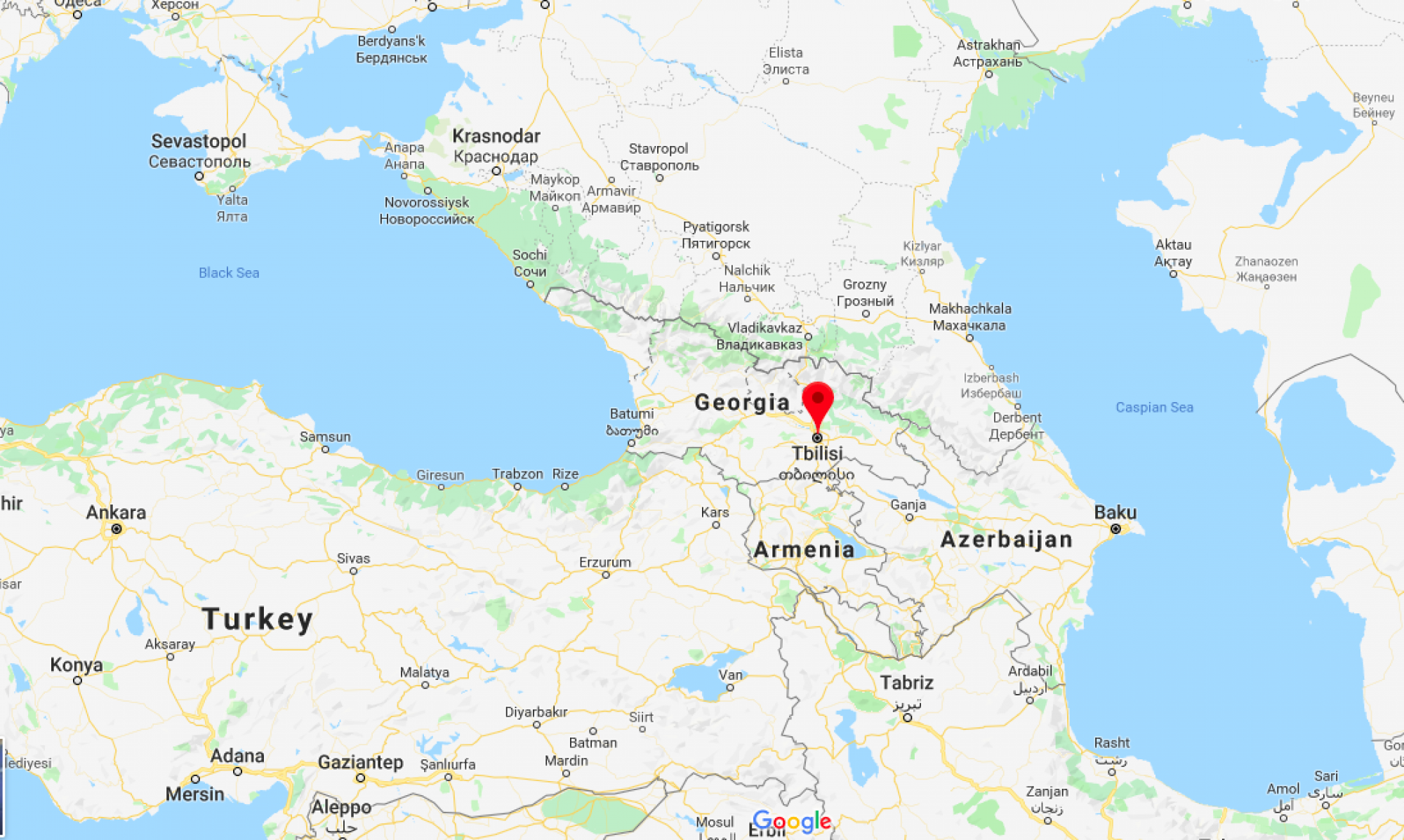
First of all, Georgia. Our destination actually takes us out of the United States, to what used to be called the Democratic Republic of Georgia until it became a Soviet republic in the early 1920s. It regained its independence in 1991, and honestly, I don’t know much more about Georgian history than that. Luckily, I have a long travel day ahead to do some research. I do know that Georgia is located at the boundary between Eastern Europe and Western Asia, bordered by the Black Sea, Russia, Turkey, Armenia, and Azerbaijan (which has always been my favorite country name). We will be in Tbilisi with the Bishop of Peace Cathedral, Malkhaz Songulashvili, and his community, celebrating Pentecost. We have also been invited to a religious festival of the Yezidi religious sect, who have a temple in Tbilisi, and we will be hearing from some of the Yezidi community who have faced religious and ethnic persecution under ISIS and the Kurdish government.

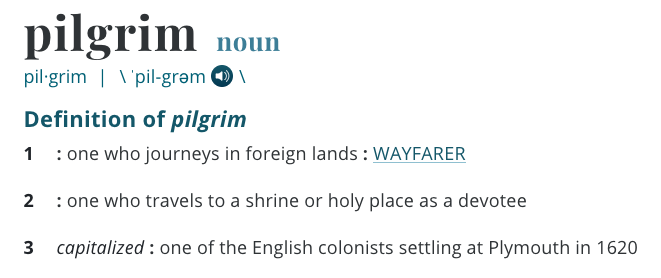
This brings me to the second word, pilgrims. I’m going to break my own rule and refer to the Merriam-Webster dictionary.

As we journey to Georgia, not entirely certain what stories we will hear or what experiences we may have, I have these definitions in my mind of what it can mean to be a pilgrim. First, one who travels abroad, who is an outsider and does not belong. To me, this primary definition reminds me to respect the history, the land, and the people I will encounter. I am only a wayfarer, someone who is briefly entering their world and who will not be able to understand it fully. However, I can be present and participate in the ways most respectful and appropriate for my role as a pilgrim, only seeing a slice of what it means to be Georgian or Yezidi.

Second, one who travels to a holy place. I met someone recently who had been to Georgia not long ago, and while he is an atheist, he said that he felt something in Georgia, a connection to the land and its spirit, that felt sacred. He was moved by this place, and I imagine I will be as well. I will be encountering a different type of Christian worship, one greatly influenced by the Orthodox faith tradition, and a different type of religion altogether, as we learn from the Yezidis about their beliefs and culture. As someone who is convinced of the necessity of interfaith collaboration and communication, I wish to be a pilgrim in this regard, even if the holy places I encounter are not from my particular faith tradition.

Lastly, I want to remember the legacy of the third definition, how often pilgrims have colonized and forced their faith onto the inhabitants of the lands they encountered, and how this resulted in the eradication of entire legacies, languages, religions, and often the people themselves. I want to be aware of that abuse of power, privilege, and perspective as I travel, particularly as we hear from the Yezidis about their experiences with faith-based charities in refugee camps that sometimes take advantage of their vulnerability and do not respect the fragility and importance of their religion and culture. As a white American Christian, I must identify and refute those practices, both past and present, whenever possible.

We are about to embark on our pilgrimage, holding to definitions 1 and 2 (and remembering definition 3) from good ole Merriam-Webster. I hope to be able to update this blog frequently, depending on time and WiFi access. Our team would ask for your prayers and your openness to what we experience during our time in Georgia.

Thank you for your support, from this particular Tbilisi pilgrim.

Design a site like this with WordPress.com
Get started