1) Eucharist, 9:30 AM
“When the day of Pentecost came, they were all together in one place.” Acts 2: 1
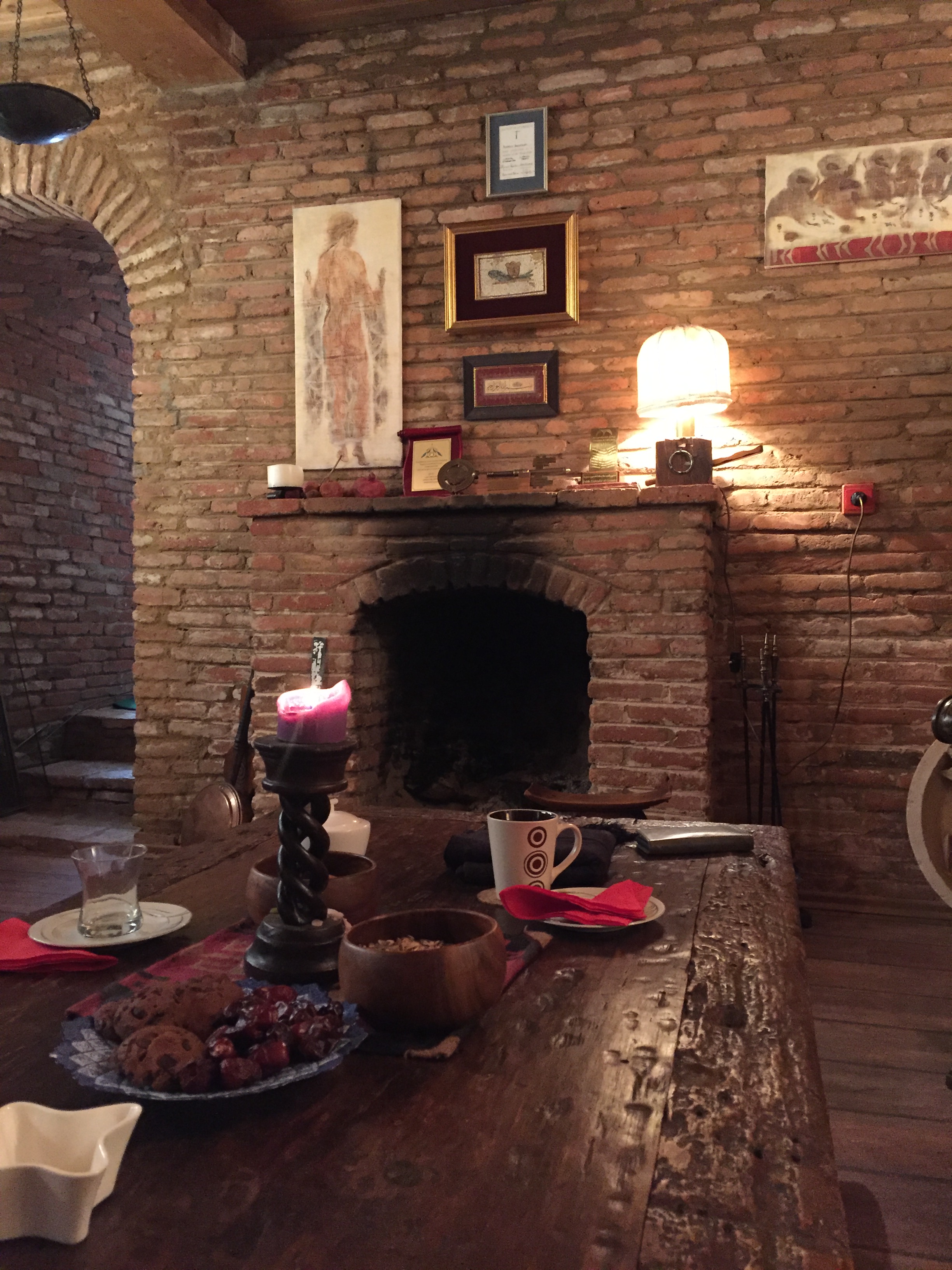
We begin the morning with English Eucharist at Bishop Malkhaz’s home. As soon as we walk through the gate, we are greeted by five dogs, all in various stages of adoration and/or protection, and after some calming and cooing, we head into the basement. I find myself in the ideal study, cave-like, all warm tones and cluttered bookshelves. The exposed brick and deep brown couches — lit by sunlight filtered through tan curtains, a few lamps, and candles on stands — make the study comfortable and homey, at least for this bookish English professor. We have Eucharist in Malkhaz’s private chapel, where we all sit on green cushions, looking at a small altar in front of a beautiful painted icon. Ala leads the readings, Paula does the reflection, and Malkhaz is just one of the congregants until it is time for the Eucharist, at which point he ducks behind a door and becomes a bishop. He remains barefoot, though, as he give us the wine and bread of Christ. Afterwards, we sit in the cozy study, drinking tea with rock sugar and talking about Georgia’s (literal) battle for LBGT rights, an issue about which Malkhaz spoke out in 2013 and lost his role as Archbishop. Ala brings the newest (and potentially temporary) member of the family to visit, a little black puppy, who, while we talk, curls up in the chapel on the green-cushioned bench, sleeping under the eyes of a patient Christ.
2) Pentecost Service, 12 PM
“All of them were filled with the Holy Spirit and began to speak in other tongues as the Spirit enabled them.” Acts 2:4
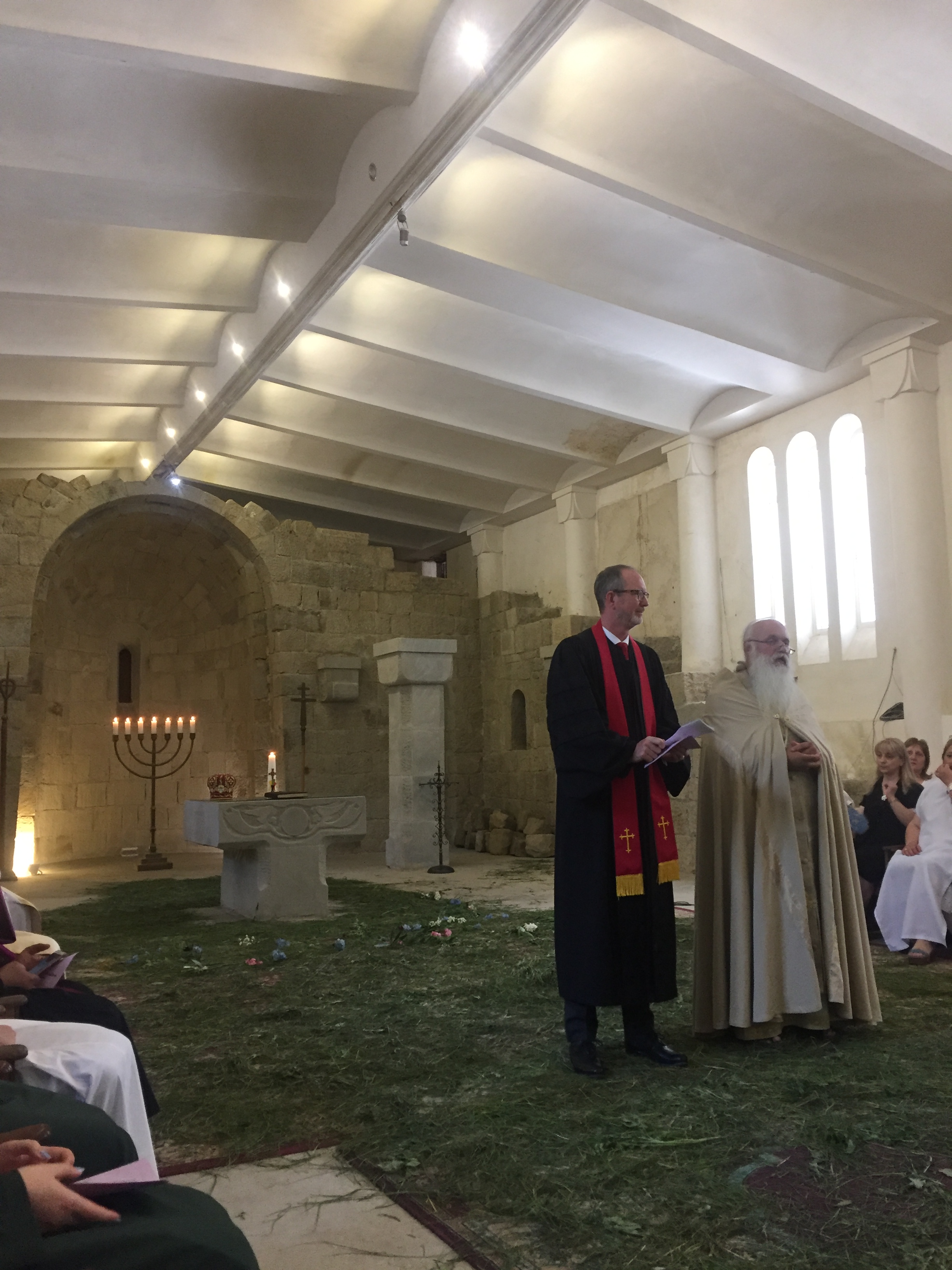
I get my first look at Peace Cathedral as we process in for morning worship on Pentecost. The carpet of the central aisle up to the altar is covered with green grass and freshly cut flowers, and the entire chapel smells like springtime. Becky and I sit in the front row of the congregation, while Paula and Scott, clad in their clergical garb, sit with Bishops Malkhaz, Rusadan, and Ilia, as well as the deacons and other visiting clergy. The call to worship is led by a little girl in leg braces, sitting next to her mother the organist; she speaks in Georgian with the clearest, purest voice, and though I don’t know the language, I still feel called to worship. During the Acts reading, different congregants stand up and read pieces of the text in different languages. The Eucharist is read in both Georgian and English, and I am struck by the beauty and inclusivity of the words. The bread is broken for all who love God — whether Christian, Muslim, or Jewish — that someday we might be one. It is broken for polluted creation, for refugees, for the hungry, for the broken-hearted, for the persecuted, for the forgotten. The bread is broken for all of us, and all of humanity, and all of creation; no one and nothing is left out. As it should be.
3) Yezidi Temple Festival, 2:15 PM
“Now there were staying in Jerusalem God-fearing Jews from every nation under heaven. When they heard this sound, a crowd came together in bewilderment because each one heard their own language being spoken.” Acts 2:5
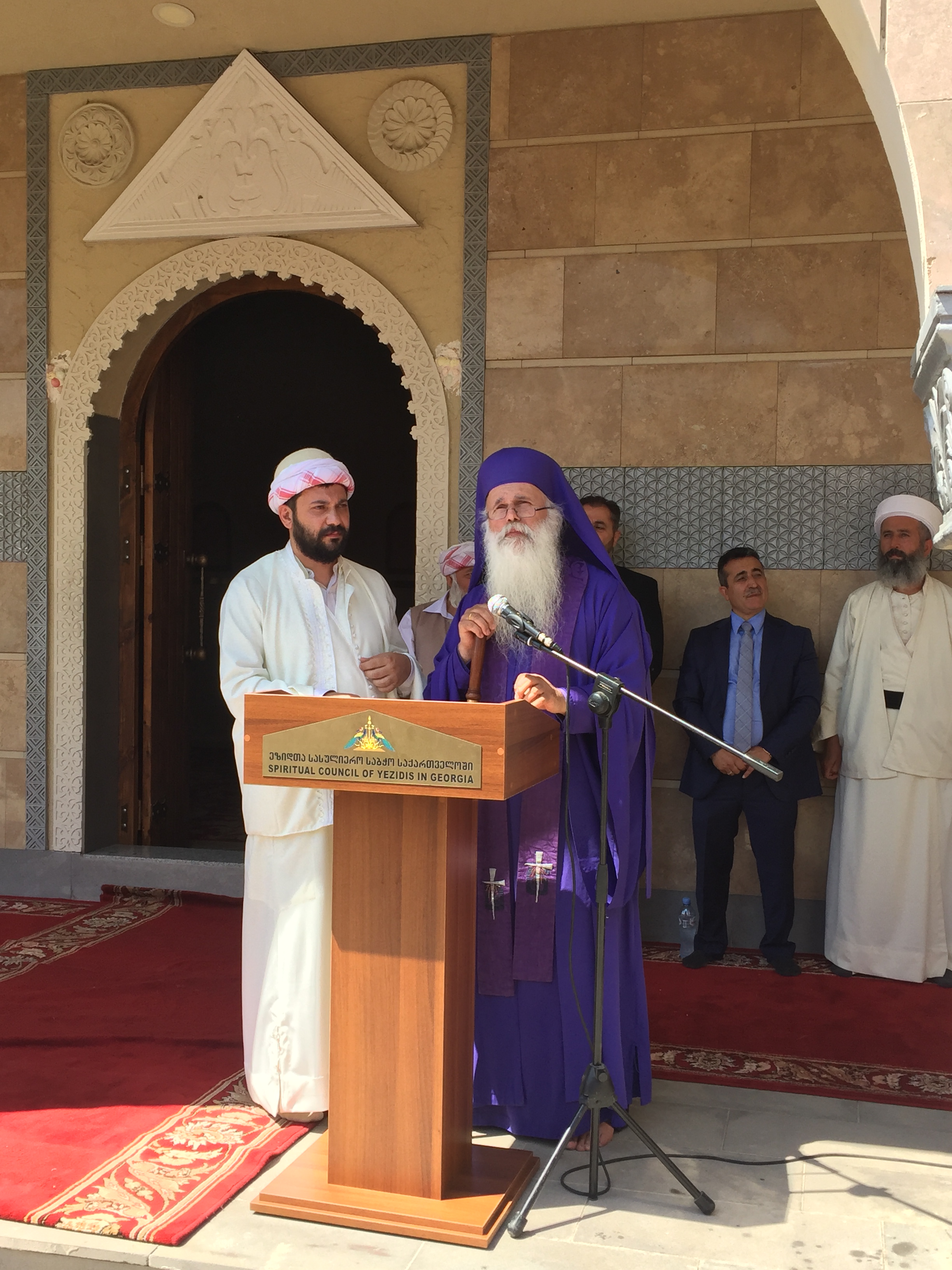
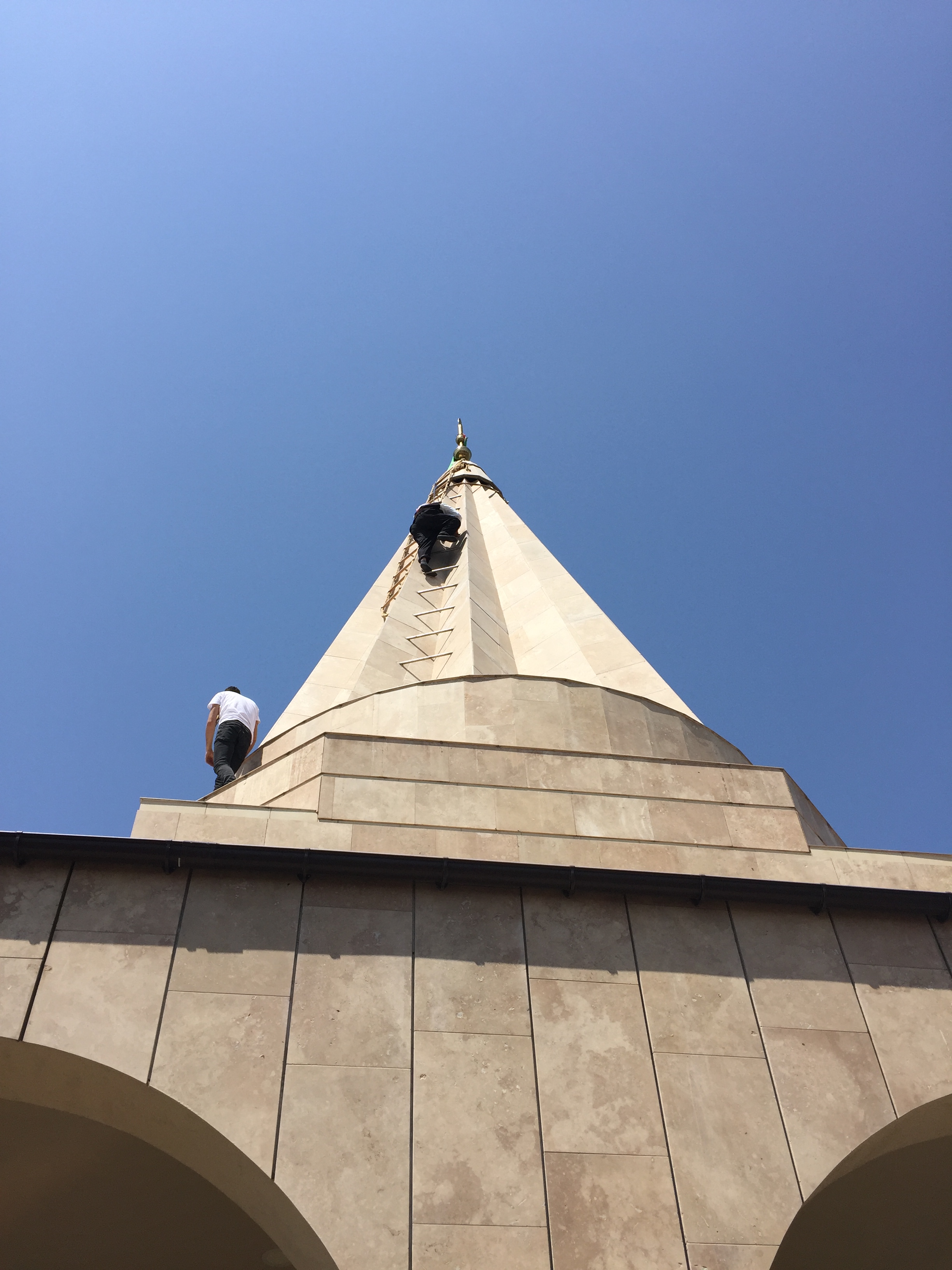
We arrive at the Yezidi temple late and are quickly ushered to a space in front of the temple, where a flute and drum are being played. A line of men stands in front of the temple, all seriousness. I snap photos as quickly as I can, feeling very much the photojournalist that I am not as I alternate between a digital camera and my iPhone. I don’t know who I am taking photos of or what anyone is saying, but the occasion simply feels momentous. Brightly colored umbrellas are passed around to ward off the warm sun, so the crowd becomes multi-colored. Waters are also handed out, which is appreciated as I can feel the sweat slipping down my back. Various speakers are called up, including Malkhaz, and their words are translated either into Yezidi or Georgian. Seeing movement, I look up, and a young man climbs the steeple of the temple and hangs a flag. Everyone cheers. Another ceremony occurs in the peace garden, and still another ceremony happens in the newly-christened Yezidi academy, which will welcome its first cohort of twelve students this summer.
At the reception (at which there is, of course, wine and cheese), we meet Mirtagi, a Muslim cleric and good friend of Malkhaz. To speak with him, we need two rounds of translation. The stately and handsome cleric speaks to a smiley young man with a very expressive face, who translates for Malkhaz, who translates for us. Conversations like this require patience, short sentences, short stories, and ultimately trust that your message will be relayed correctly. They take time and confusion. Despite their difficulty, these are the important conversations: with Georgians, Muslims, Yezidis, everyone. We have to cultivate patience, trust, and hope. And maybe some bewilderment.
4) Yezidi Dinner, 6:00 PM
“Amazed and perplexed, they asked one another, ‘What does this mean?'” Acts 2:12
At dinner, we accidentally choose the table right in front of the speakers, which isn’t a problem until the music begins. Before long we just reconcile ourselves to our (hopefully) temporary deafness, as we eat — there are no shortage of feasts in Georgia — and drink. At various points, all of the men stand up, for reasons no one can really describe. But this is all just a precursor to the dancing. Three women begin the dancing, standing in a line in the middle of the floor, one holding a handkerchief. It’s a sort of line dance that moves in a simple pattern forward and back and to the right. The women in the line link pinkie fingers and move their arms to match their footwork. Soon, three young men come and join them, taking the handkerchief. Before long, the dancers fill the floor in a circular, then snaking pattern. Some men — young and old — add flair to their movements, while the women look cool and aloof. American and Georgian students attempt to join in, with only some success, before starting their own less formal dance party near their table.
The songs are long, ten, fifteen minutes; at some point, a drum comes out. I do not dance, nor do my colleagues in clerical robes, but I am utterly taken with the movement, the song, and the clear tradition of this dance. I cannot tell who on the dance floor is from Germany, Georgia, Iraq, or any number of other countries where Yezidi make their homes. They move as one, and I wonder how often they get to move in such a way, at least on this scale. The Yezidis are an ethno-religious group, closely bonded, exclusive yet compassionate. Their culture, religion, and traditions are what tie them together, despite their physical distance and despite how their people are persecuted, oppressed, and exiled. Theirs is a painful story of genocide, attempted assimilation, and the psychological ramifications of chronic fear, yet none of that is present in the faces of those dancing with their extended family.
5) Post-dinner Debrief, 8:15 PM
“Some, however, made fun of them and said, ‘They have had too much wine.'” Acts 2:13
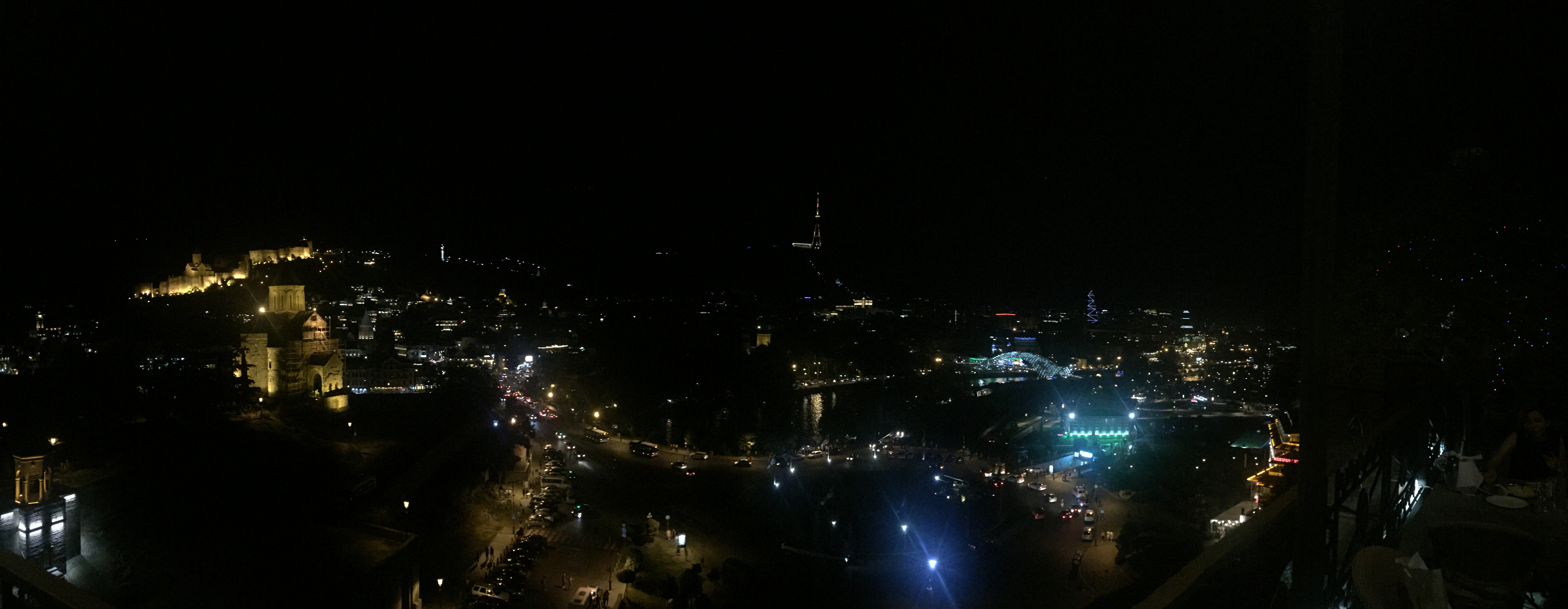
We are the first to leave the Yezidi party, and we all leave partially deaf. Malkhaz suggests we get drinks and process our Pentecost day. We arrive at a restaurant with a rooftop patio that overlooks Old Town Tbilisi, with views of the Mother of the City, the Peace Bridge, the old City Wall, and the terraced buildings of Old Town. We’ve spent so much time out of Tbilisi that this is our first proper look at the downtown area, and I’m enamored with its beauty. More wine is ordered, as is more food — ostensibly for our driver, who hadn’t eaten dinner, but also because the philosophy in Georgia is the more food, the better. Malkhaz assures us he has only ordered a “quarter” meal. It starts to rain a bit, so we move inside, where the view from the open windows is just as good but we get the benefit of hearing the pianist. We talk about the challenges and beauty of Yezidi culture, we puzzle and laugh over our experiences and uncertainties, all while we drink three bottles of wine, eat tomatoes and cucumbers, and watch teenagers take Instagram photos in front of the gorgeous view that twinkles to life as the sun sets on Pentecost.
“No, this is what was spoken by the prophet Joel:
‘In the last days, God says,
I will pour out my Spirit on all people.
Your sons and daughters will prophesy,
your young men will see visions,
your old men will dream dreams.
Even on my servants, both men and women,
I will pour out my Spirit in those days,
and they will prophesy.
I will show wonders in the heavens above
and signs on the earth below,
blood and fire and billows of smoke.
The sun will be turned to darkness
and the moon to blood
before the coming of the great and glorious day of the Lord.
And everyone who calls
on the name of the Lord will be saved.'” Acts 2:16-21
 Tbilisi Pilgrims